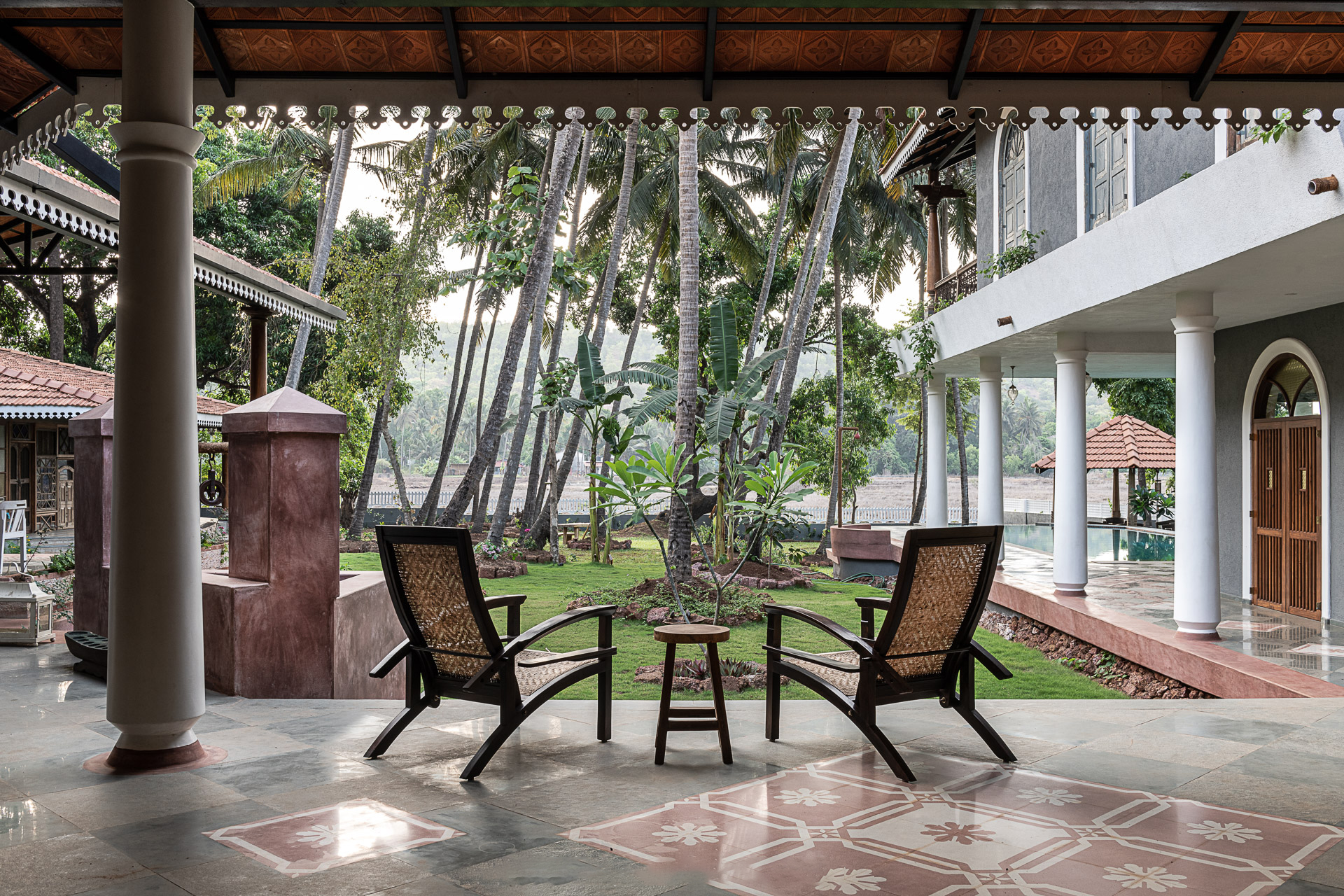
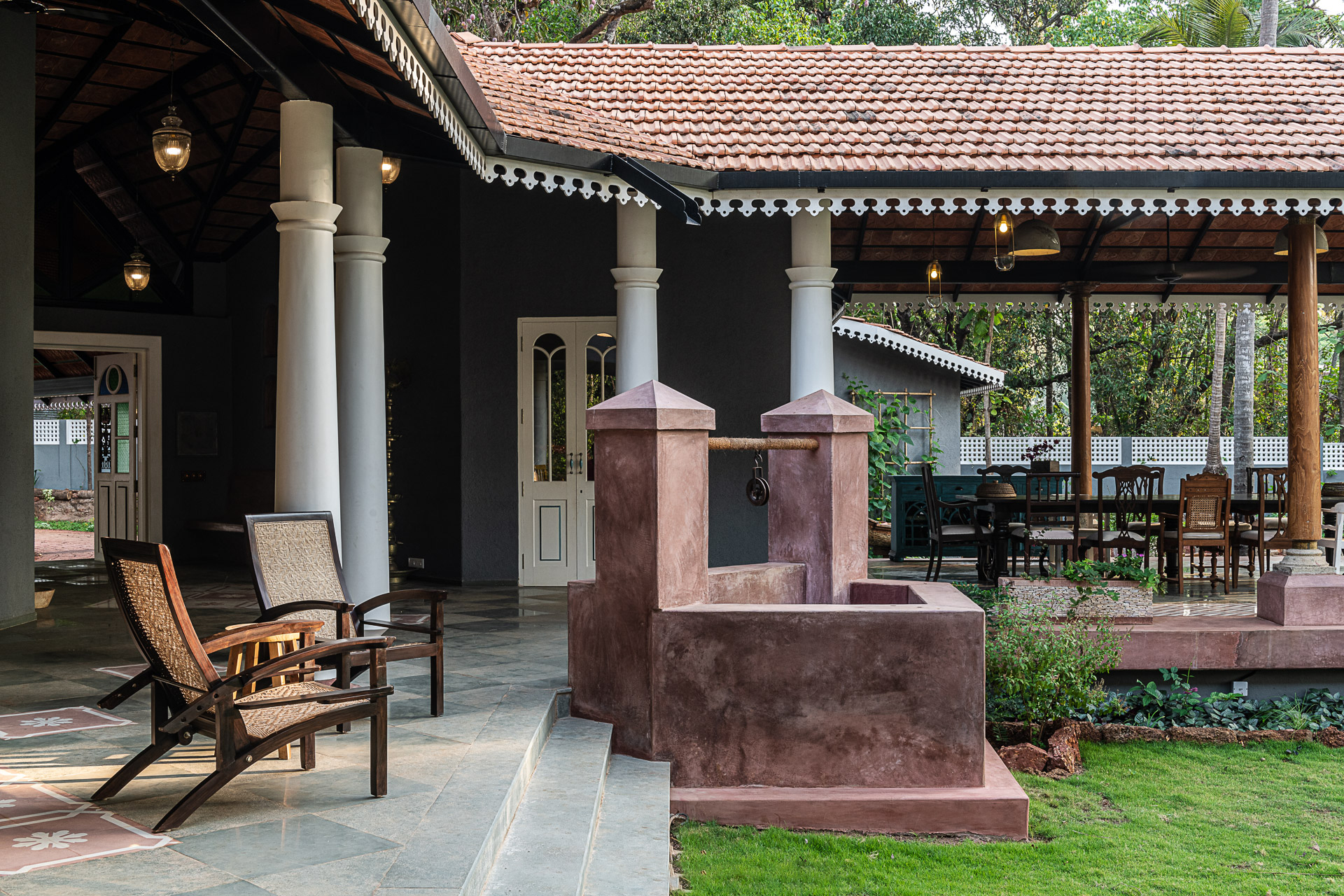
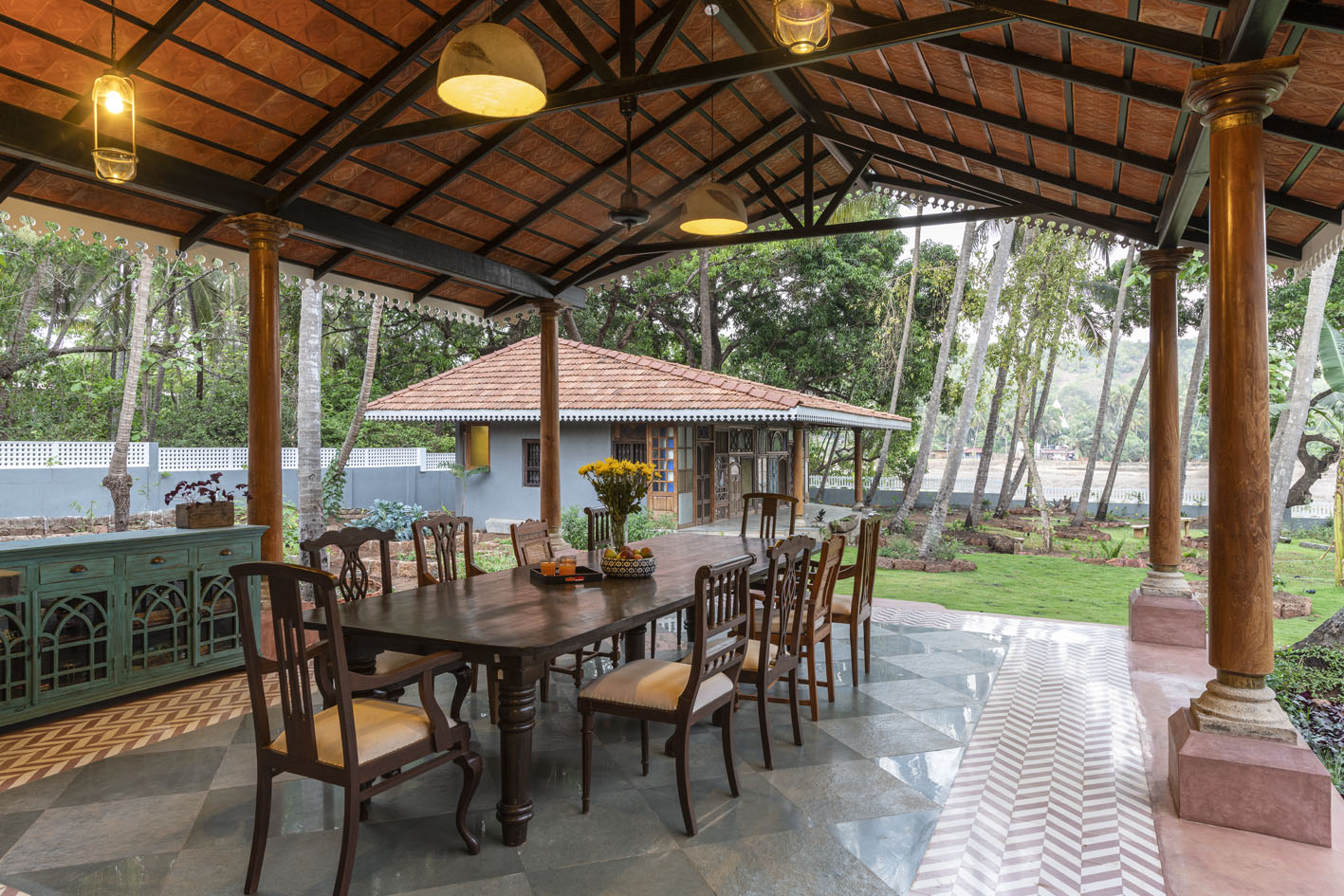
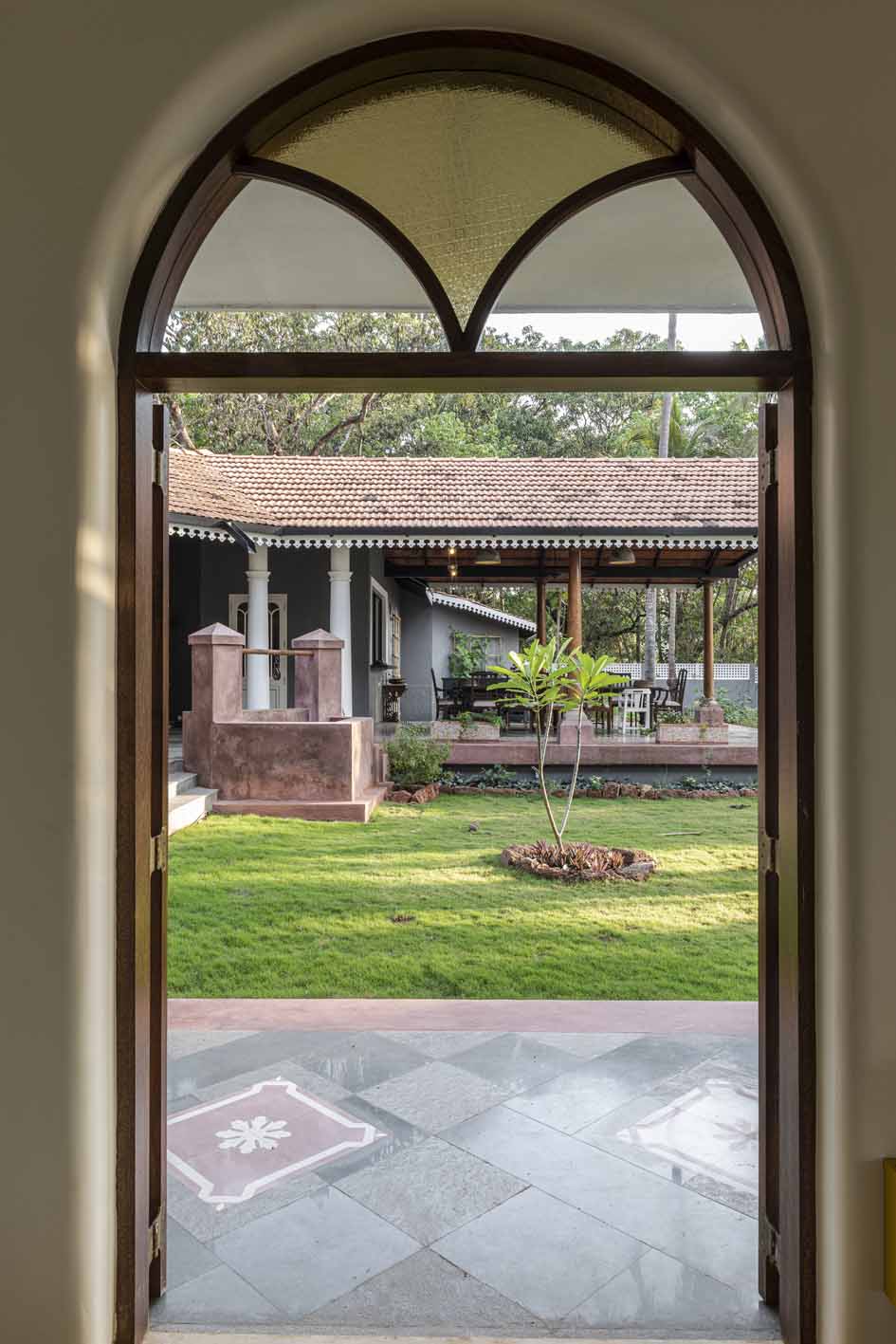
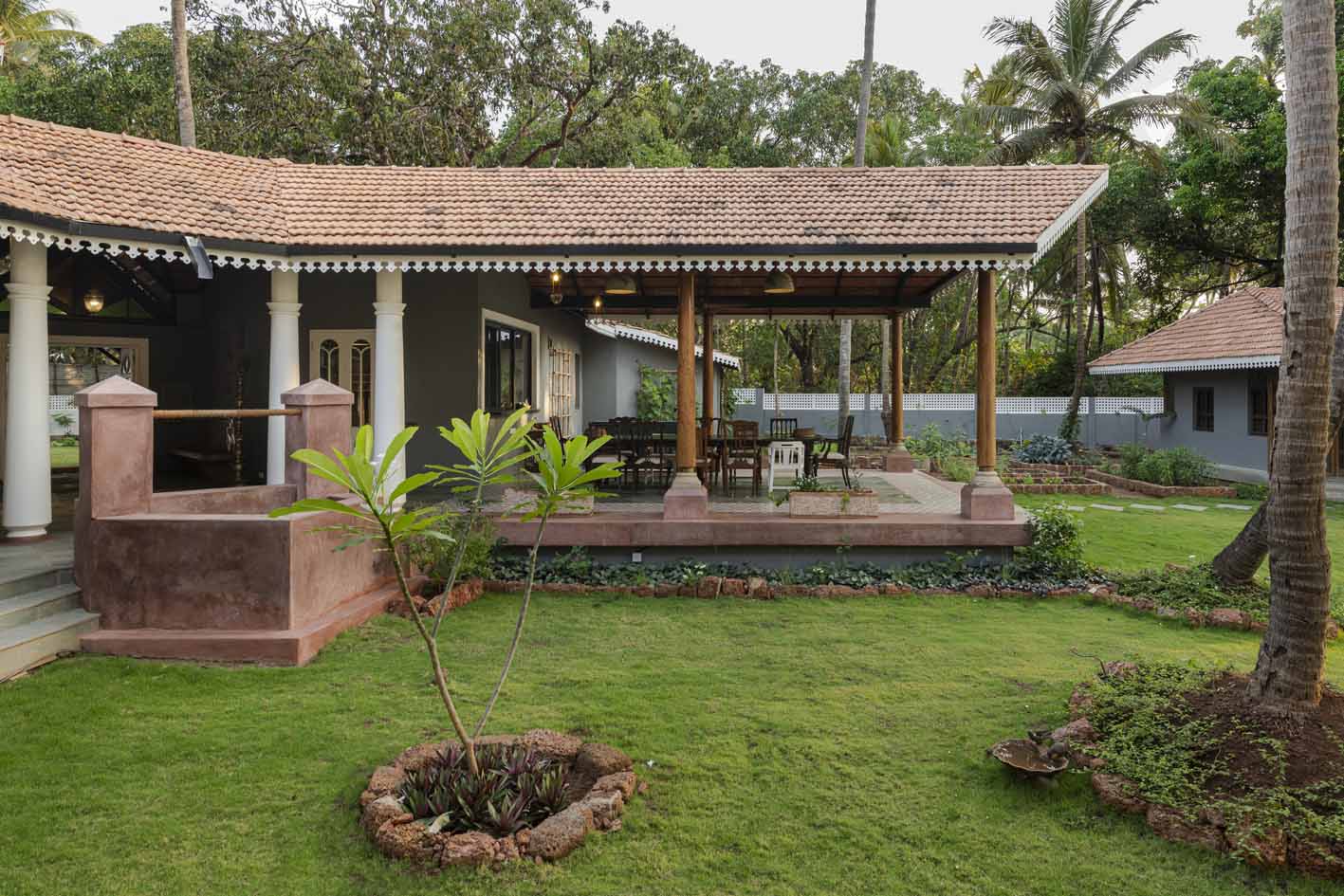
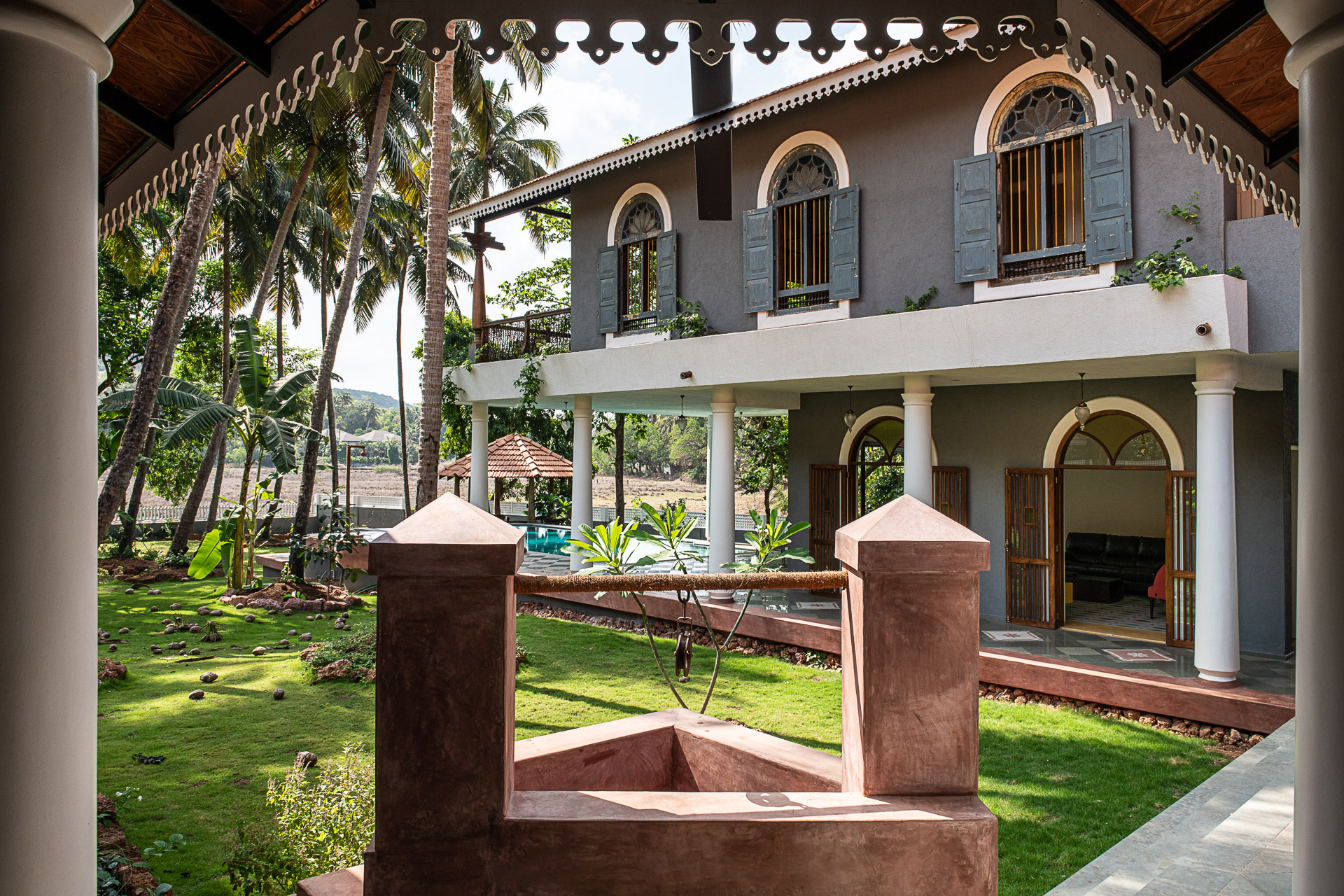
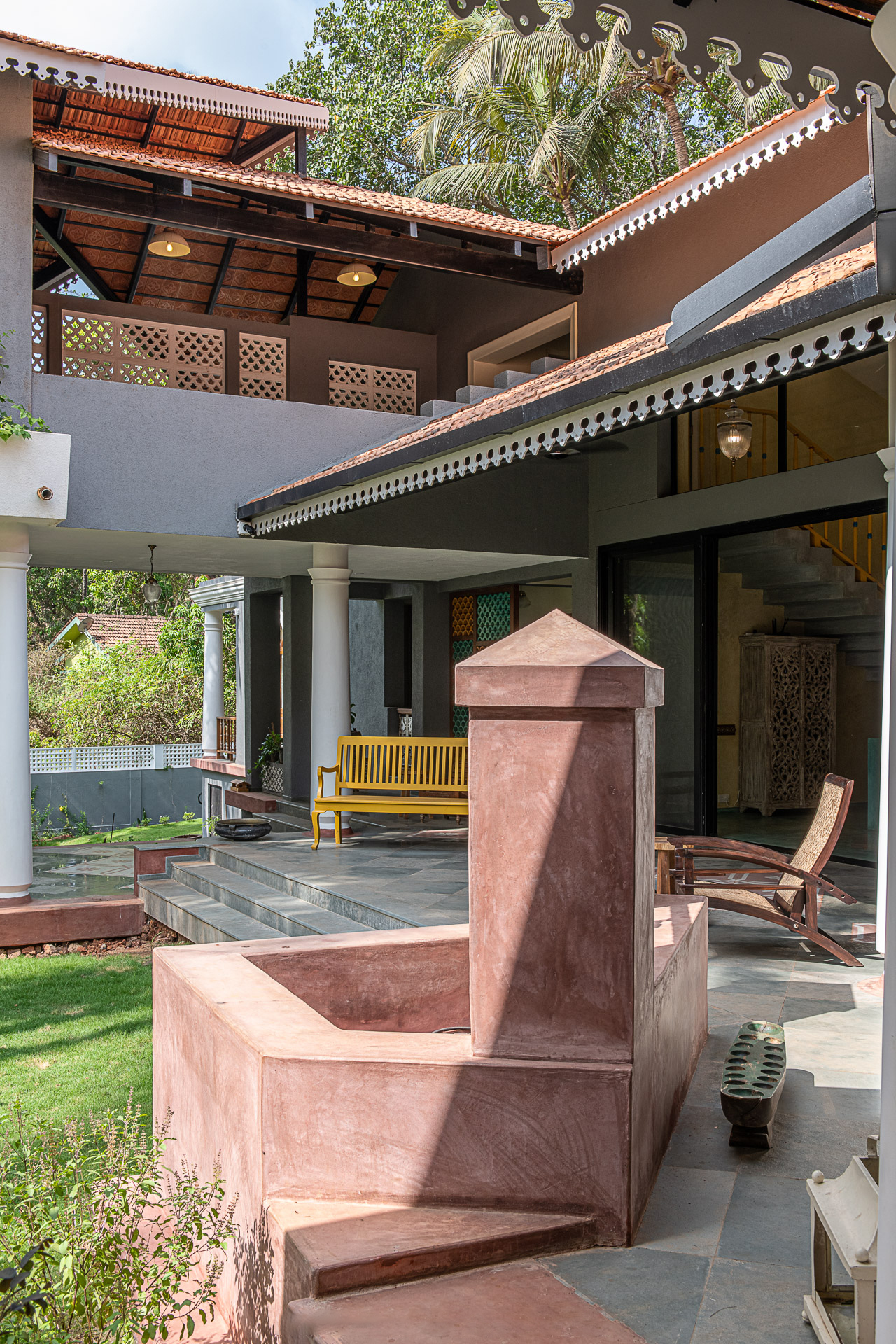
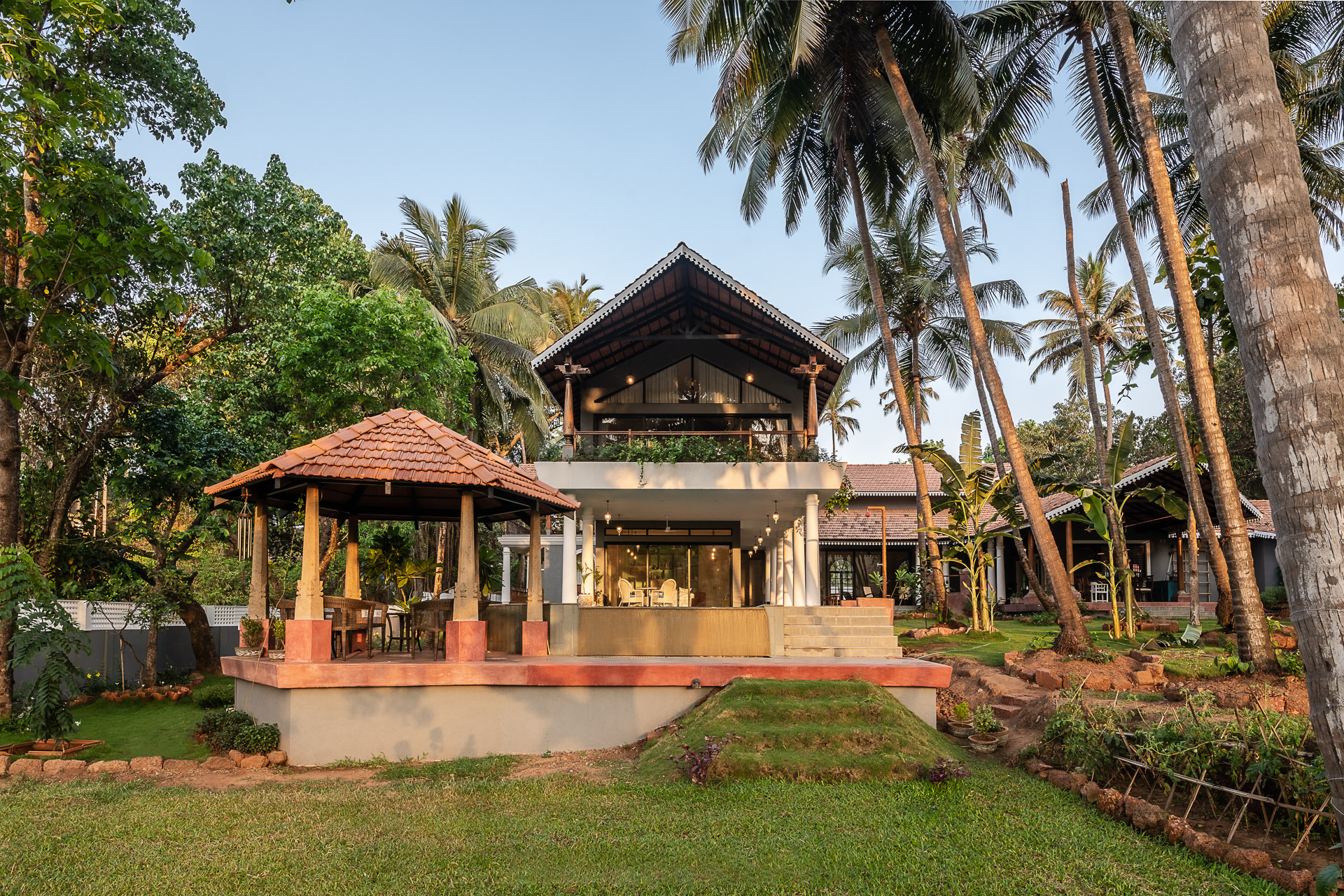
Overlooking paddy fields in Goa, this home is an exploration of tropical Indian architecture shaped by land, memory, and making. Planned as a C-shaped courtyard house, the design draws from traditional coastal typologies, where verandahs mediate between enclosure and landscape. The house is aligned on axis to an ancient well discovered on site—an unassuming yet powerful presence that became the project’s spatial, cultural, and ecological anchor.
The well marks an earlier life on the land. Restored and honoured, it occupies a corner of the three-sided courtyard, while the new roofs are designed to return rainwater back to it—establishing a regenerative dialogue between the old and the new. This seasonal exchange binds architecture to place through water, time, and continuity.
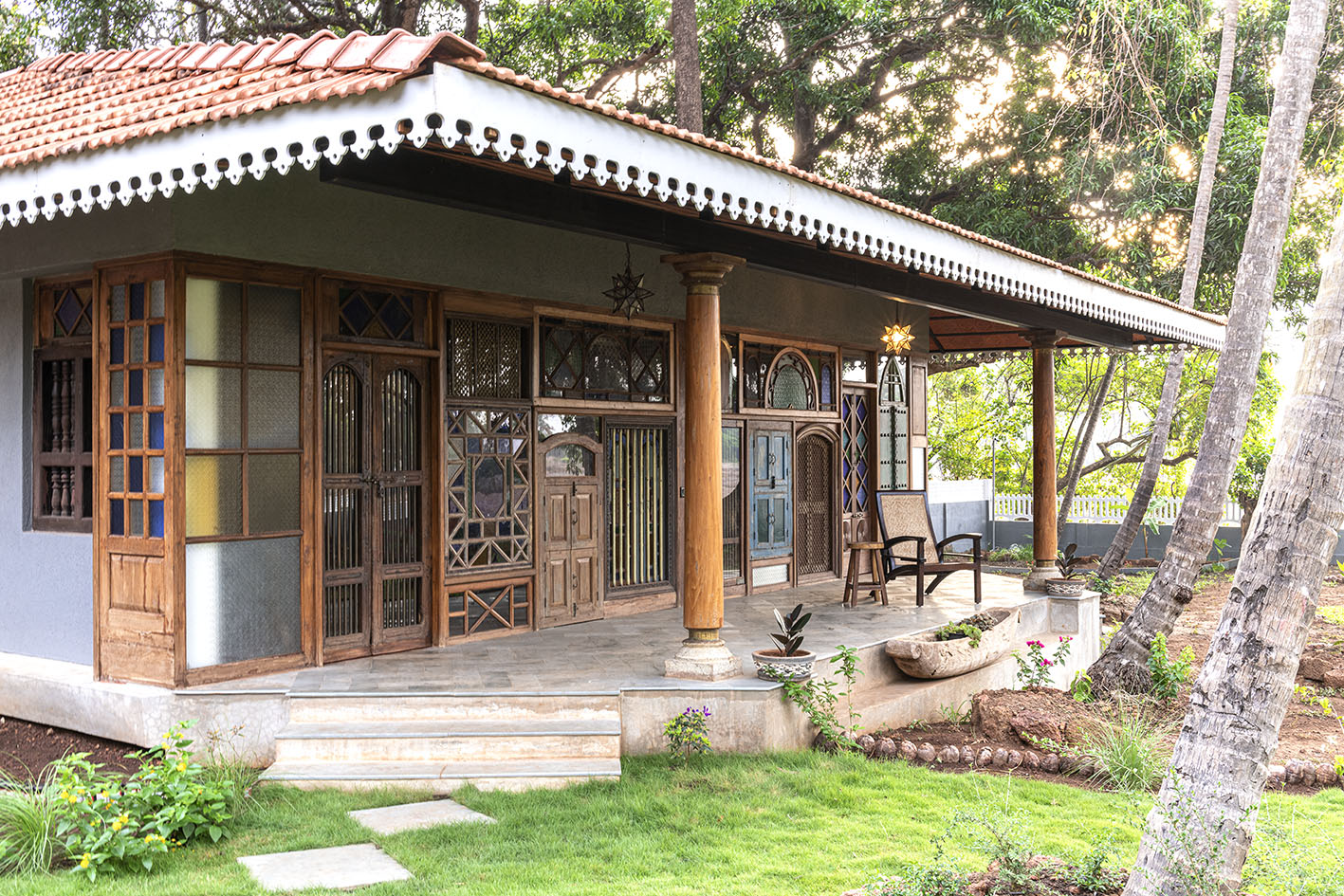
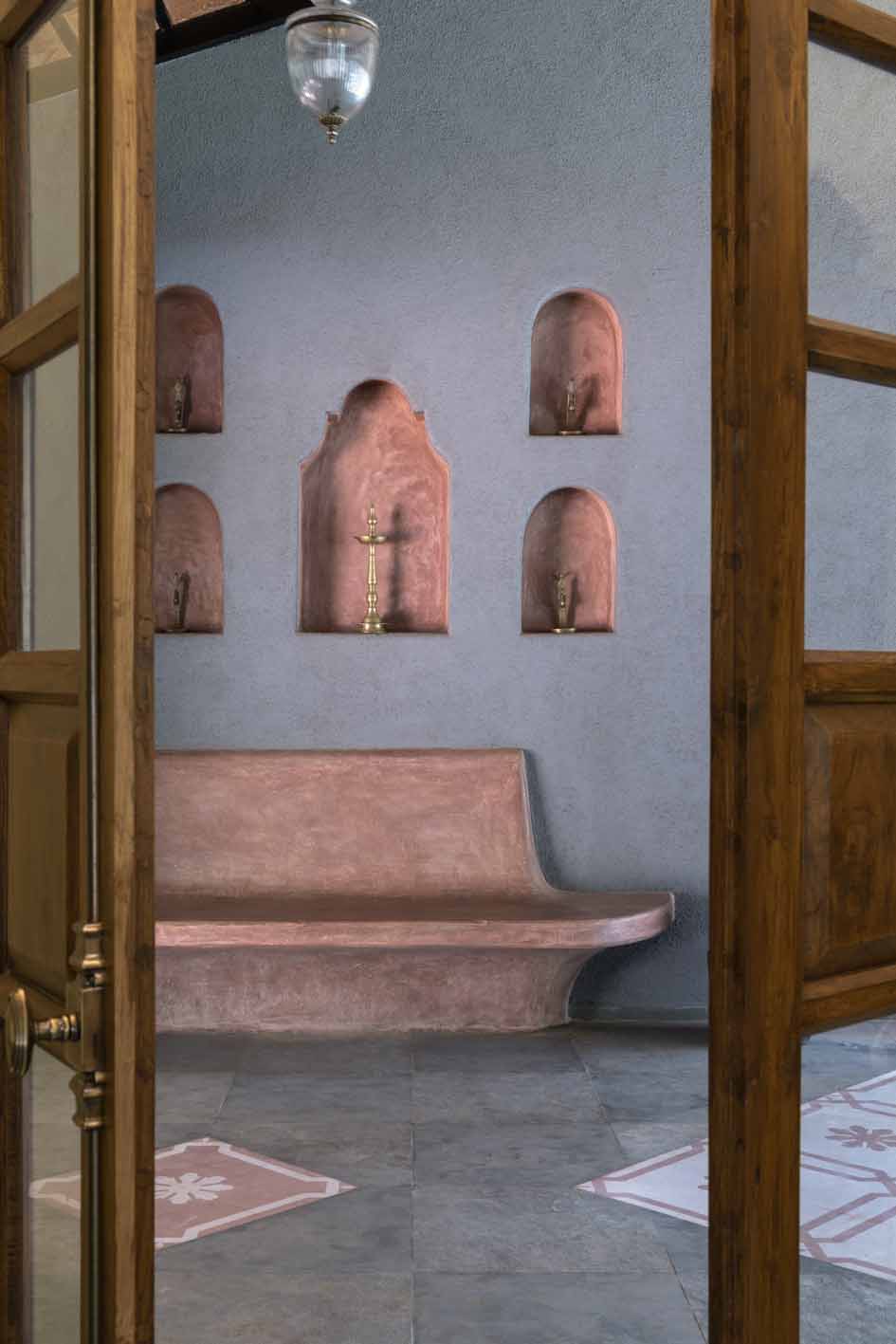
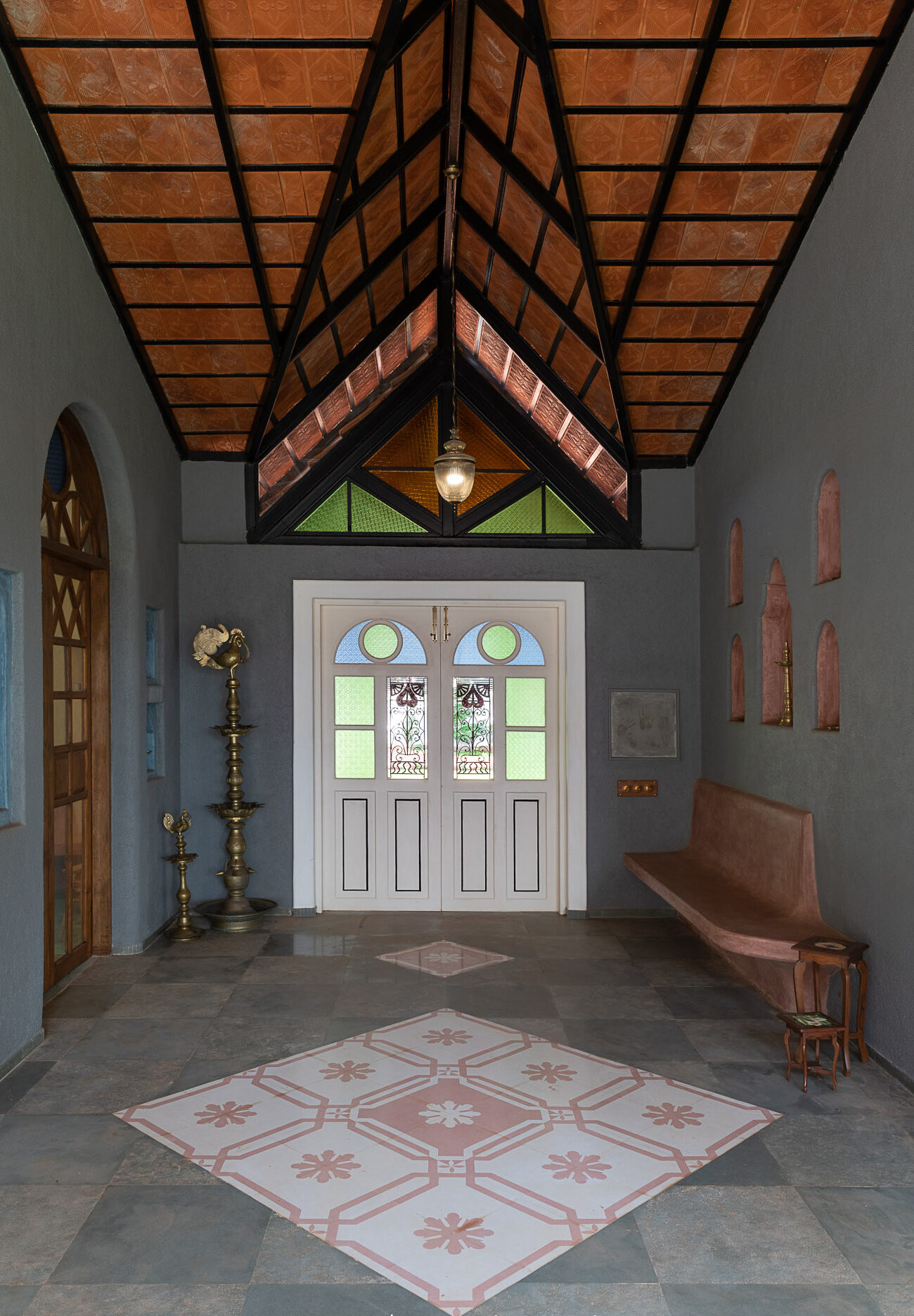
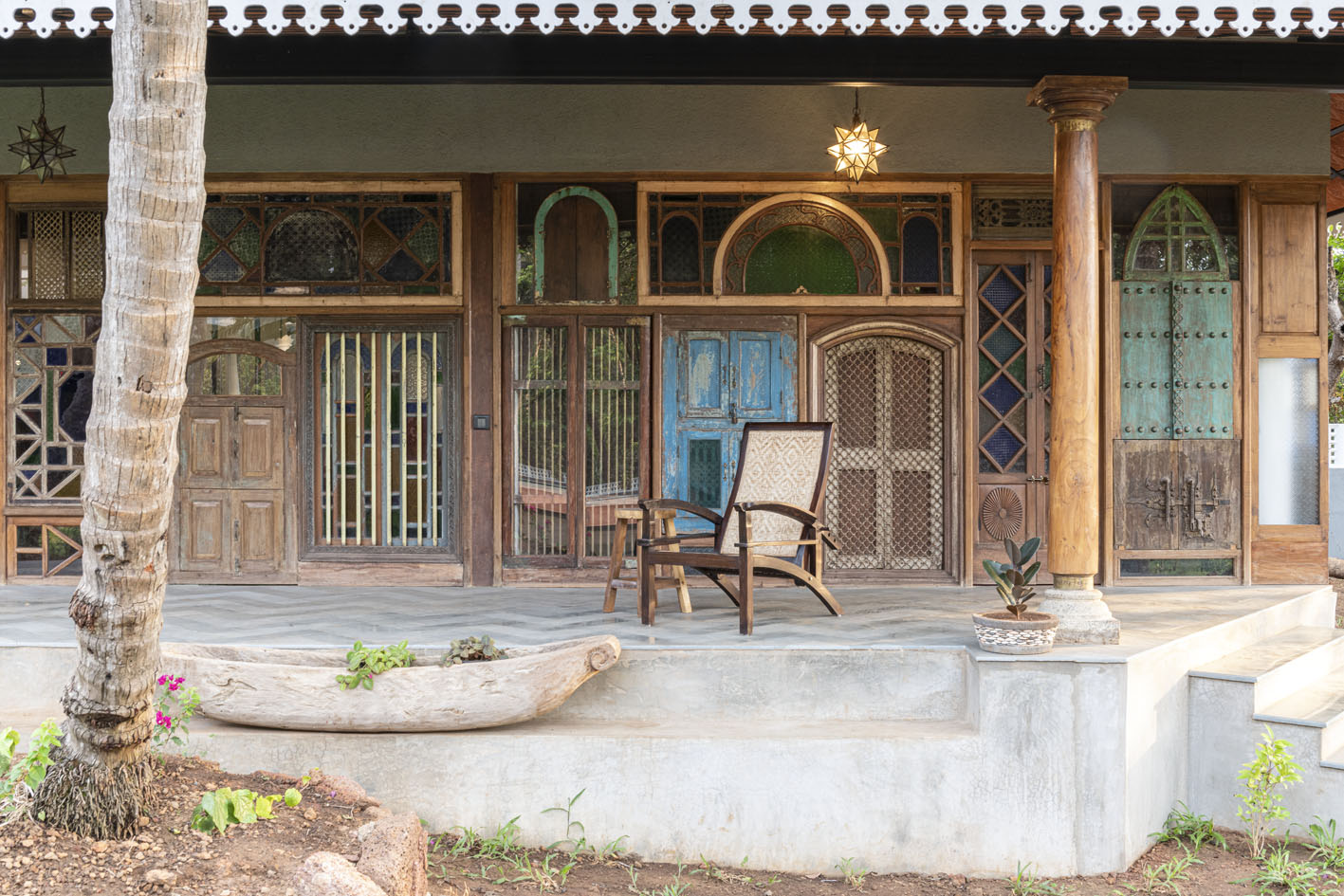
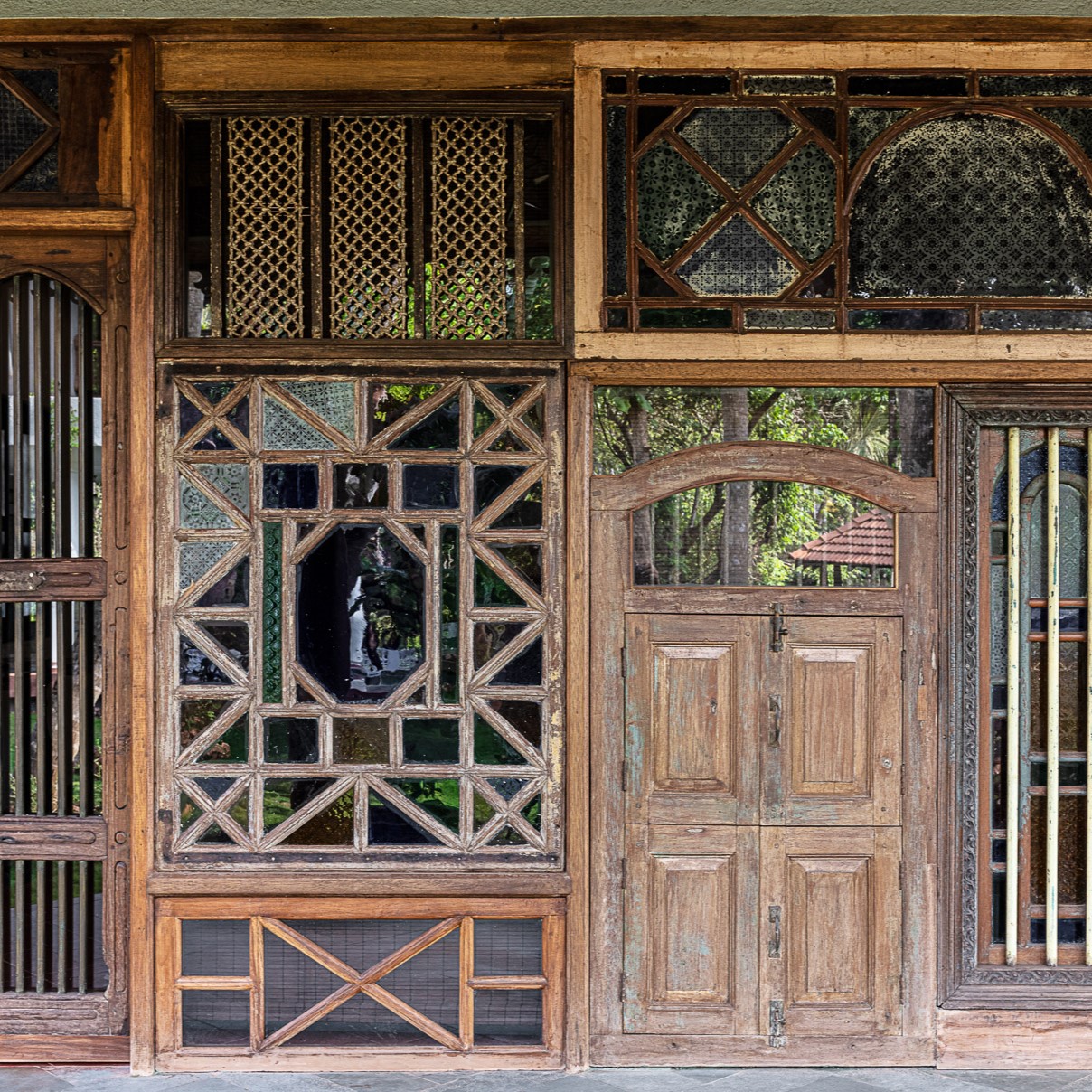
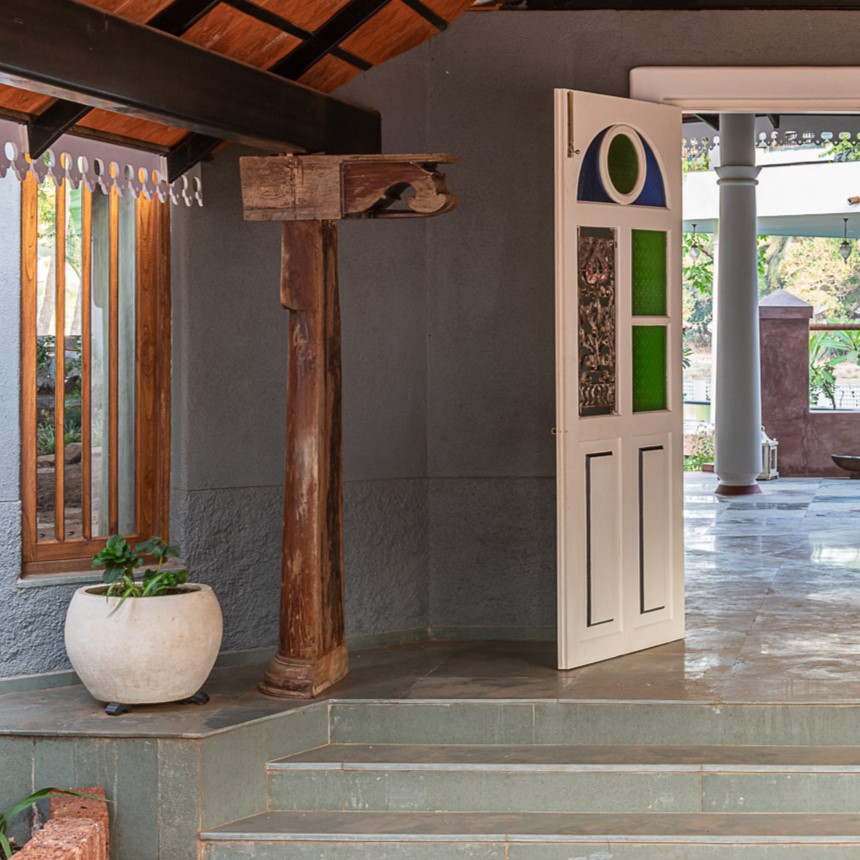
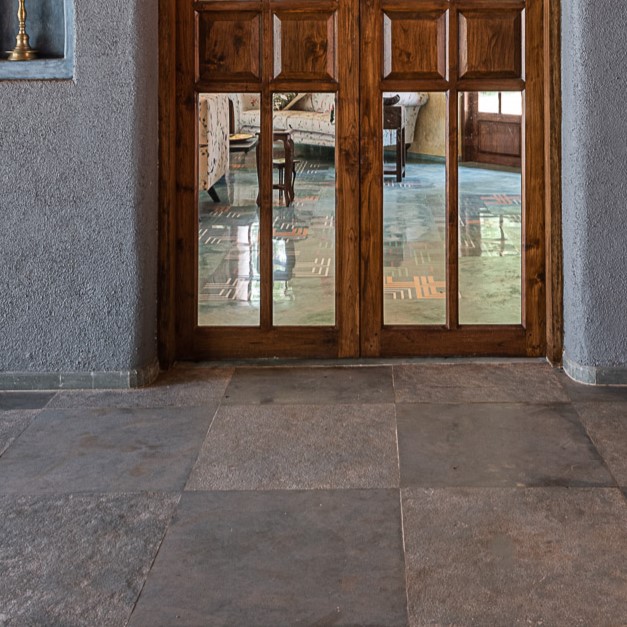
Craft and reuse shape the home’s material expression. Antique windows, doors, columns, and entire façades—sourced from dismantled homes in Kerala and beyond—are carefully assembled to form a new architectural envelope. Though disparate in origin, these elements are collaged together to create a coherent whole, allowing materials with different histories to coexist under new circumstances. Wood from varied forests, glass from different seas, and hardware forged by different hands come together in a shared narrative of belonging.
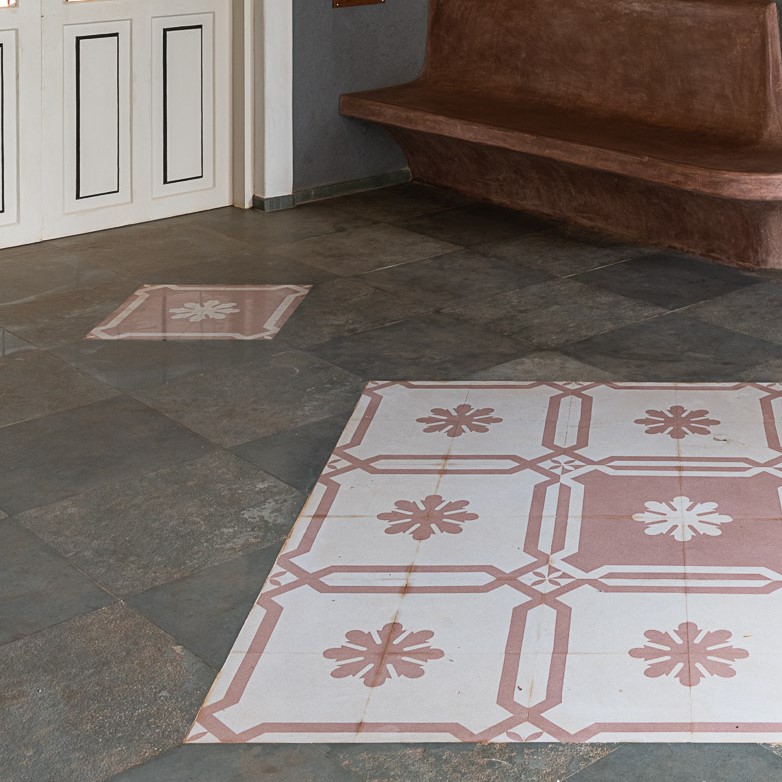
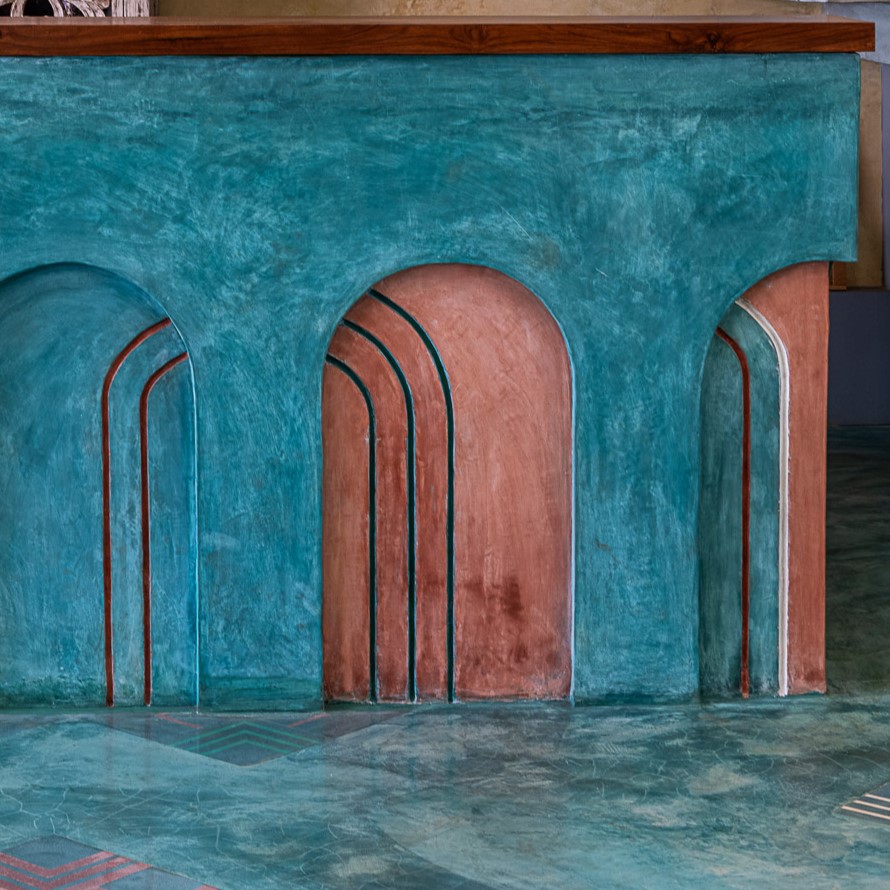
Colour, tactility, and the handmade are embraced throughout, including thirty-five bespoke cement tile patterns that animate the floors. Initially imagined as a modest guest cottage, the house gradually became the blueprint for a transformed way of life—one rooted in generosity, hospitality, and a slower, more grounded rhythm of living in Goa.