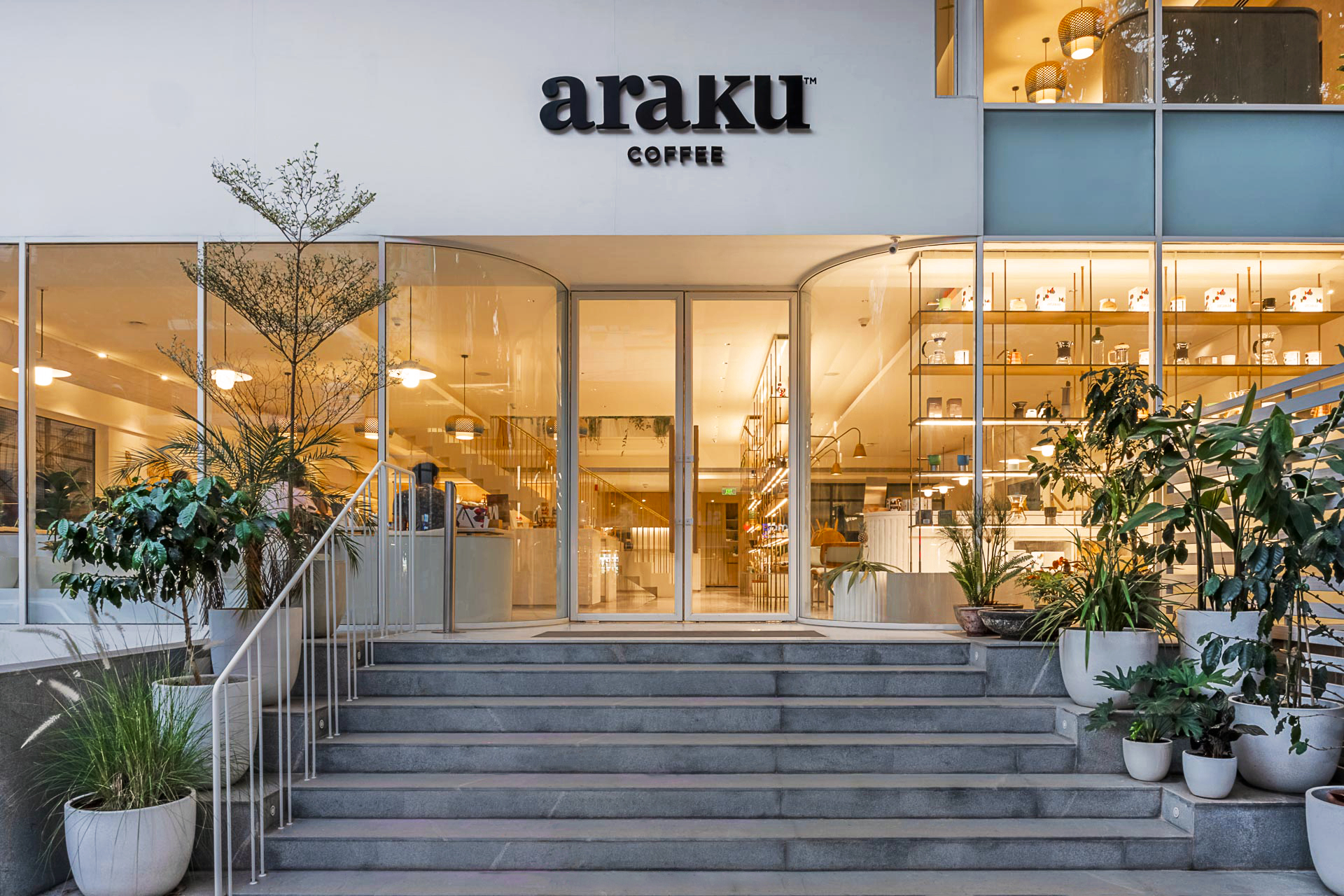
Araku Café is a tranquil oasis that brings together coffee, craft, and culture. With botanical surrounds, neutral tones, and collaborations with leading Indian designers, it creates a serene yet vibrant stage for the world of Araku coffee.
Spread across 5,000 sq ft over two levels in Bangalore, Araku Café is conceived as more than a café—it is a cultural space built around the rituals of coffee, the ecology of its origin, and the communities that sustain it. LAB approached the project not as a fit-out, but as a translation of Araku’s philosophy into spatial experience.
At its core, the café tells the story of coffee as culture rather than commodity. Araku Coffee’s work with the Naandi Foundation—partnering with tribal communities to build sustainable livelihoods, protect forests, and practice regenerative agriculture—forms the conceptual backbone of the space. The architecture responds directly to this ethos, grounding the experience in terroir, process, and time.
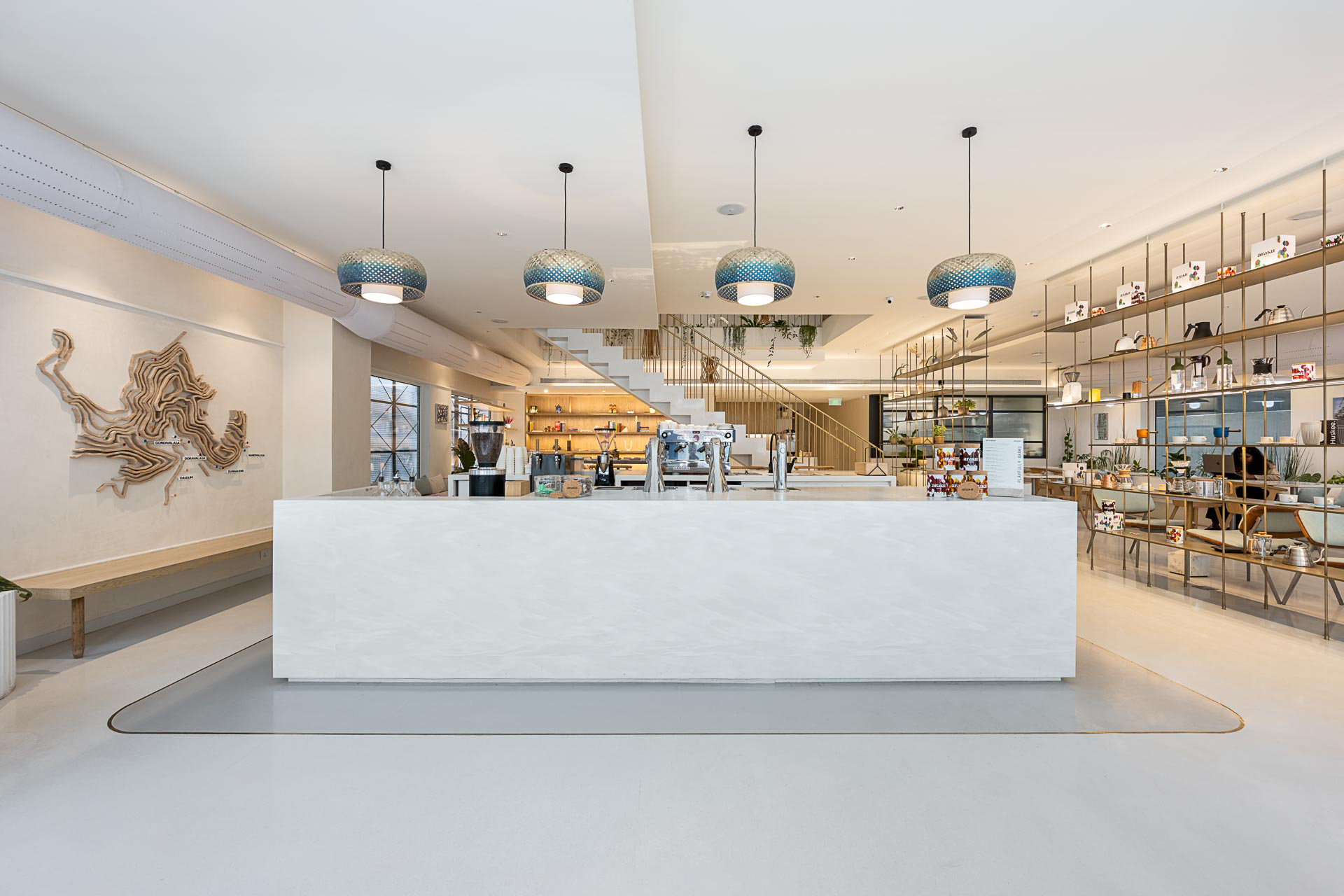
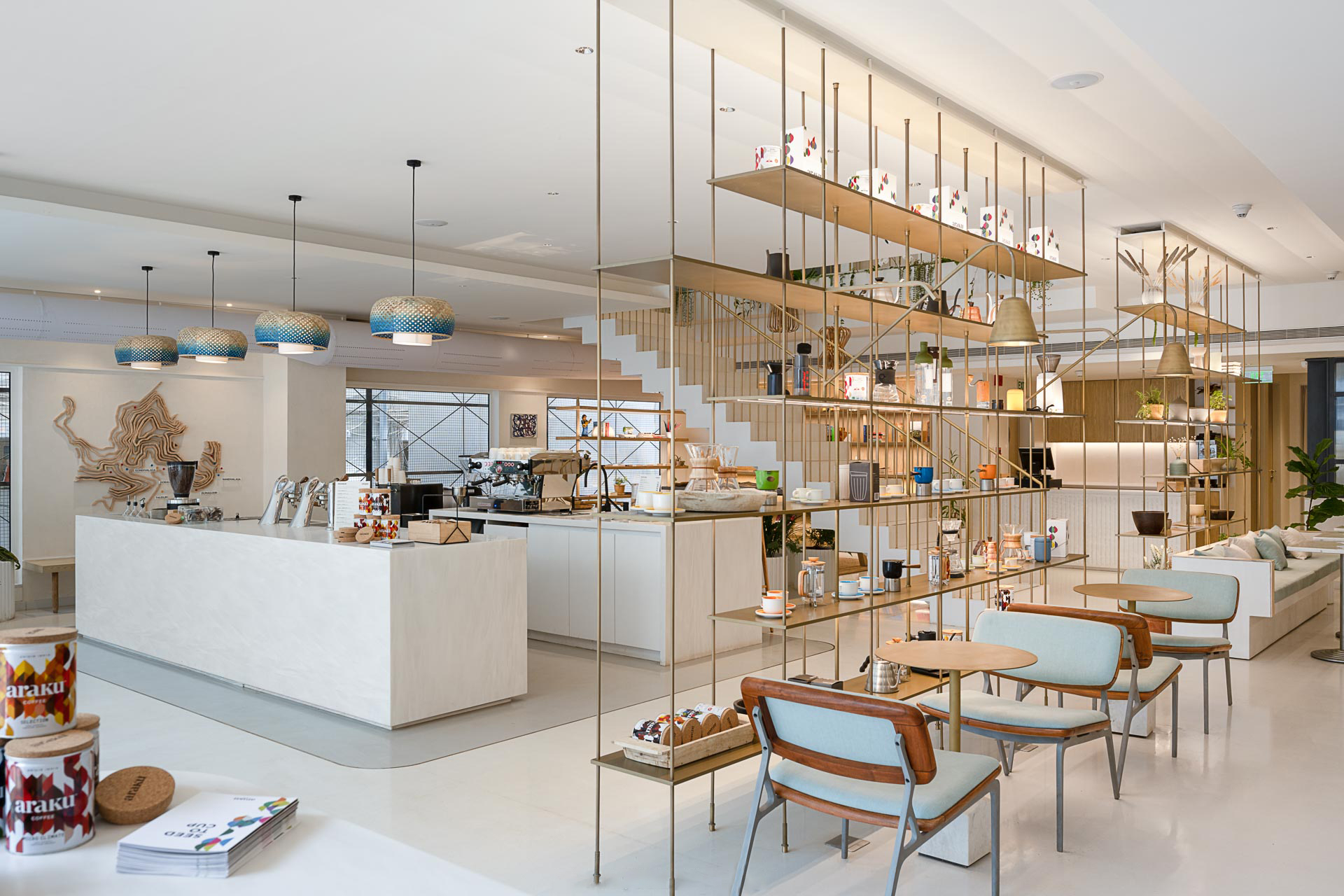
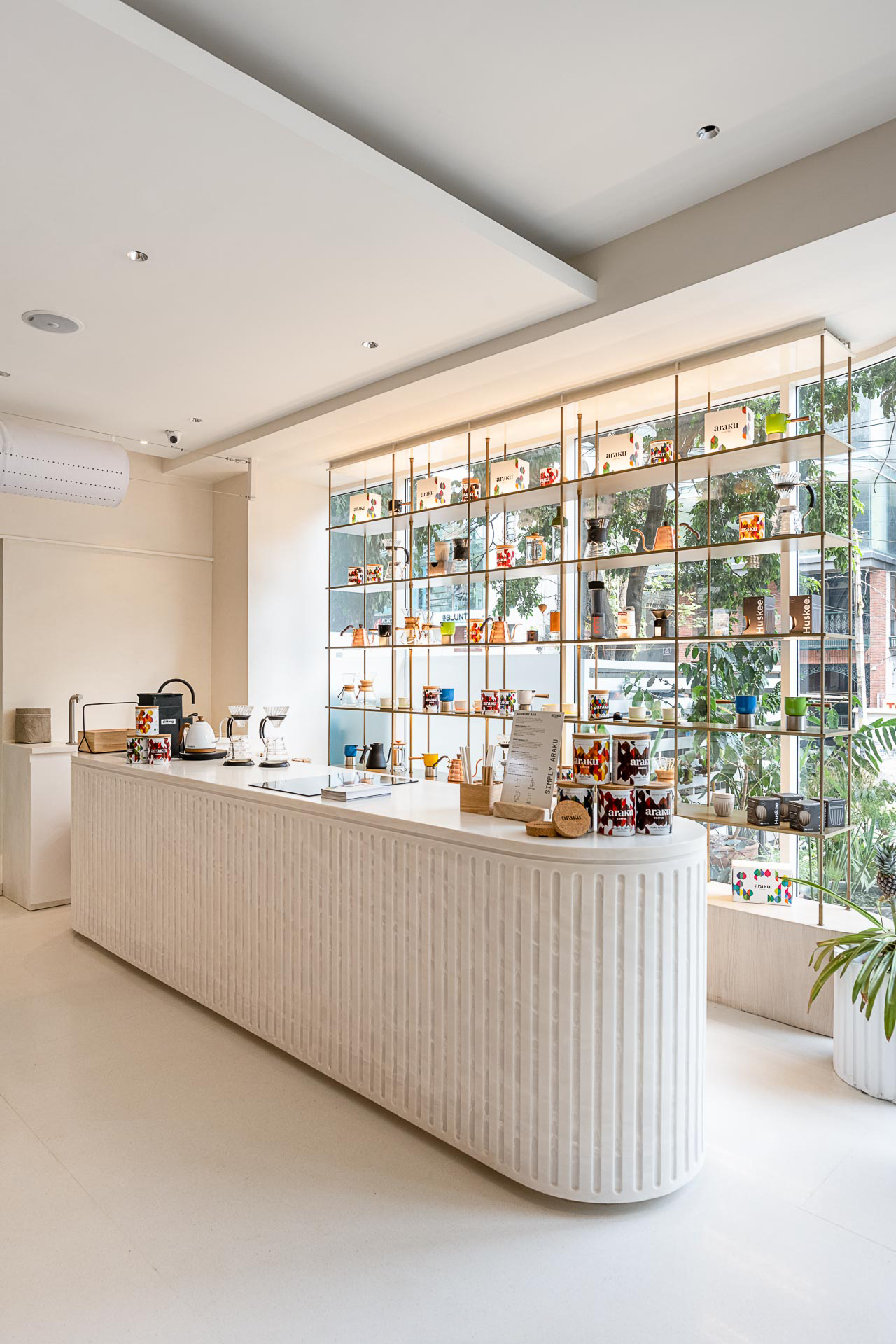
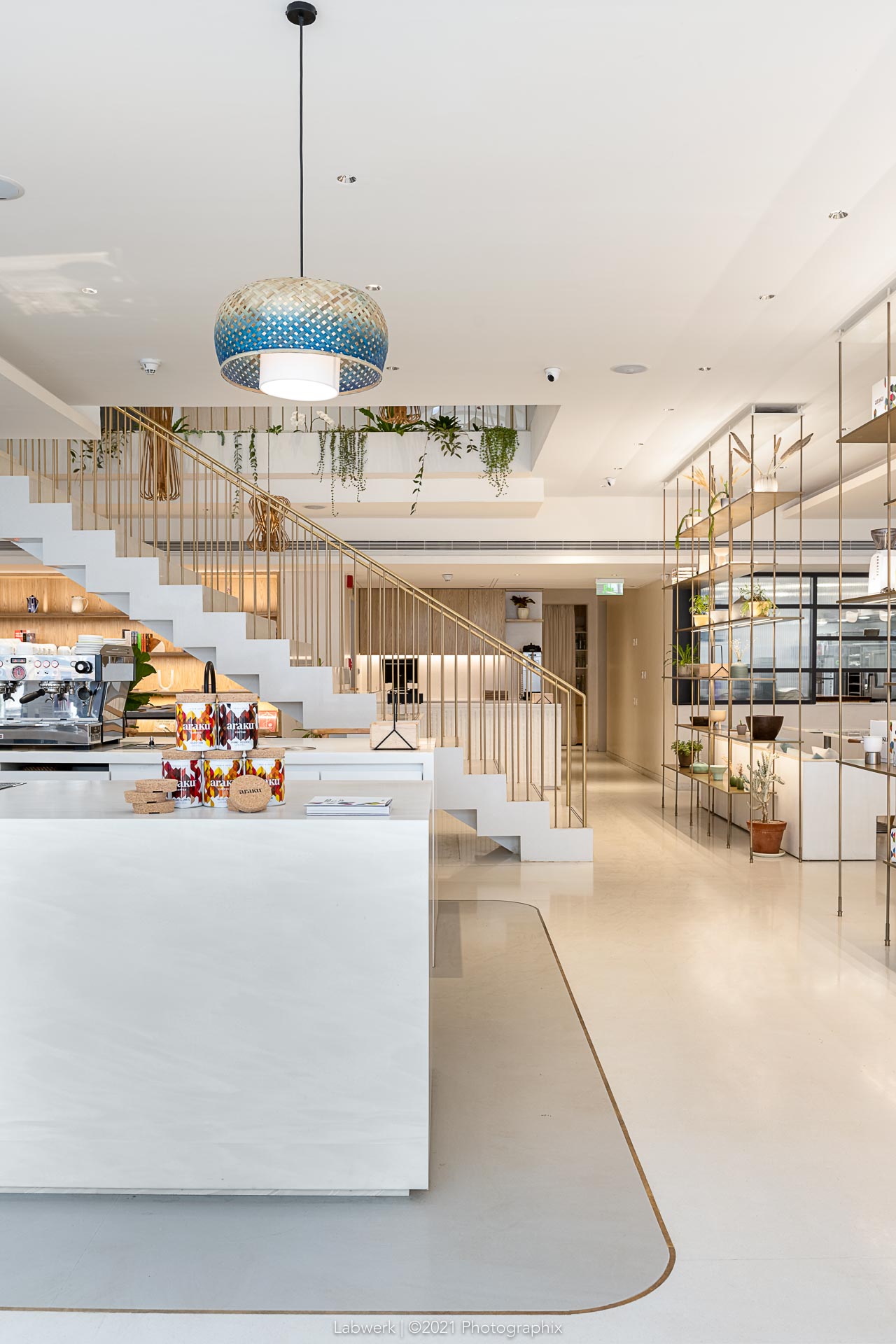
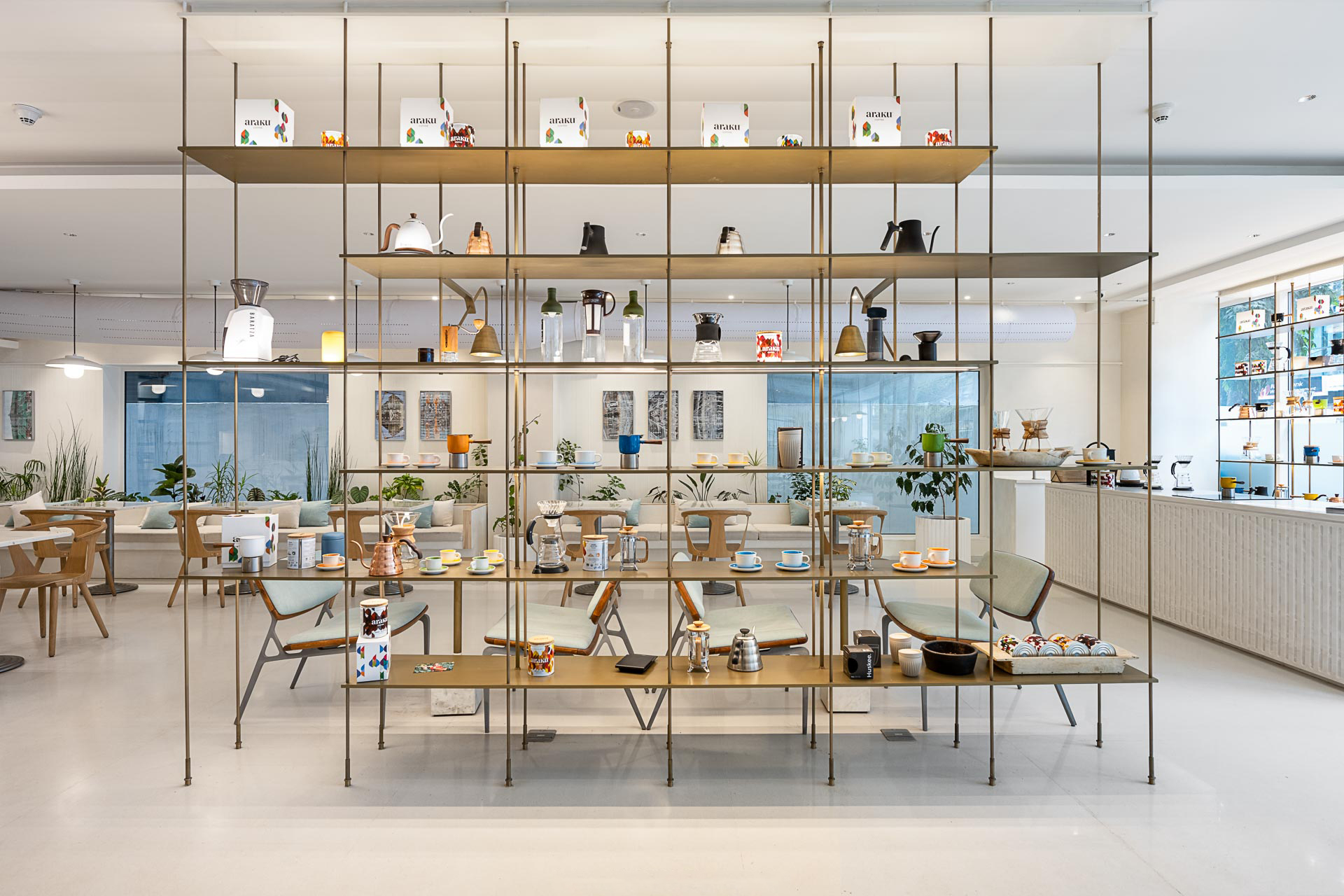
The ground floor brings together the café, retail, and a curated bookshop, conceived as a relaxed, porous environment that invites lingering. A central island barista bar anchors the space, designed as a place of conversation rather than performance. Here sits India’s first MOD bar, whose low-profile form allows unobstructed dialogue between barista and guest—making the act of coffee-making transparent, social, and shared.
Ritual is central to the design. Mobile coffee service trolleys move through the space, enabling different modes of brewing and service, and reinforcing the idea of coffee as an evolving, participatory experience rather than a fixed counter transaction. An open kitchen similarly celebrates ingredients and process, extending the philosophy of transparency from cup to plate.
A defining spatial element is the 3D laser-cut timber contour map of the Araku Valley, which rises subtly within the café. This sculptural installation traces the topography of the coffee-growing region, grounding the urban interior in the physical reality of its landscape. It acts as both artwork and orientation device—quietly reminding visitors of altitude, terrain, and climate.
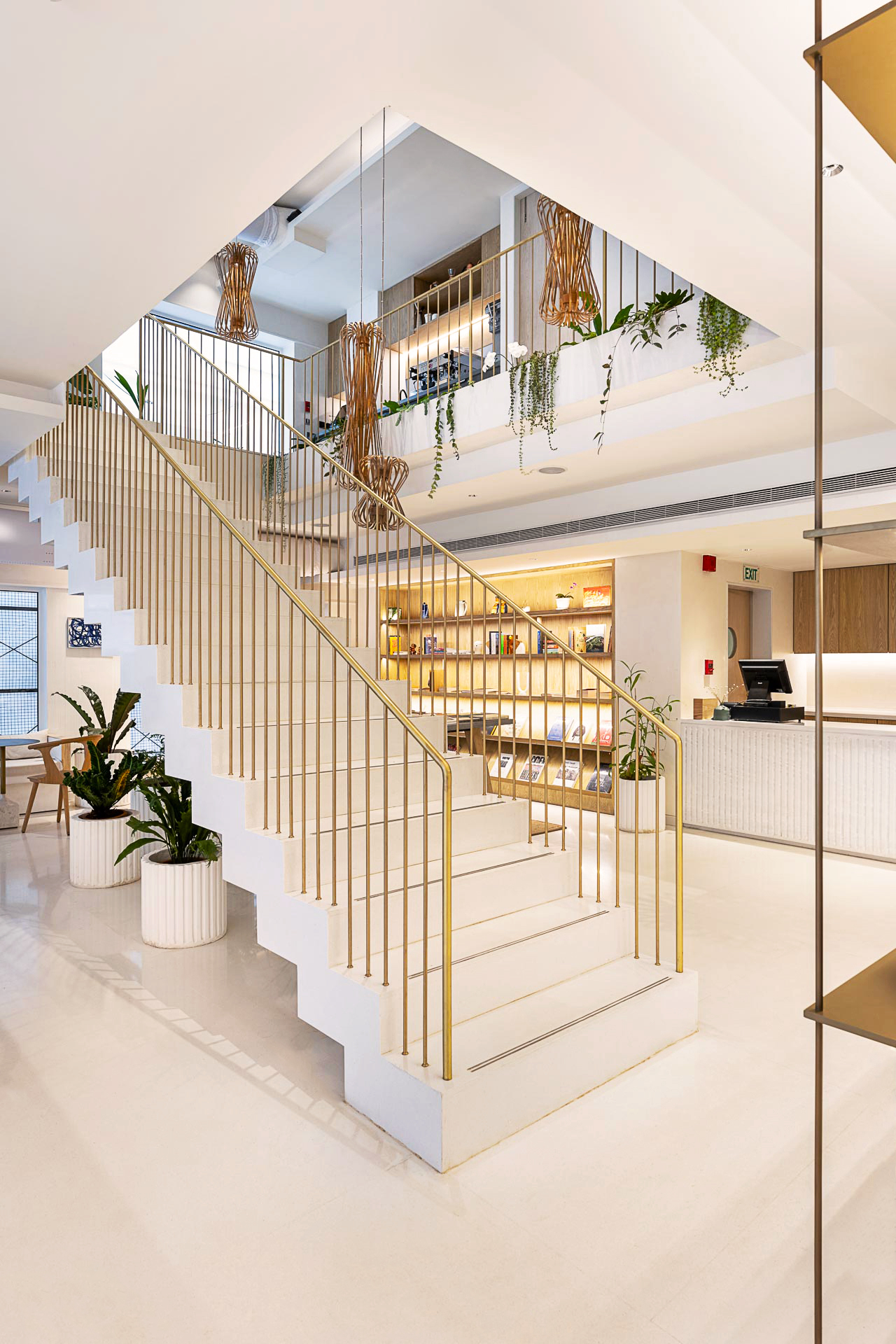
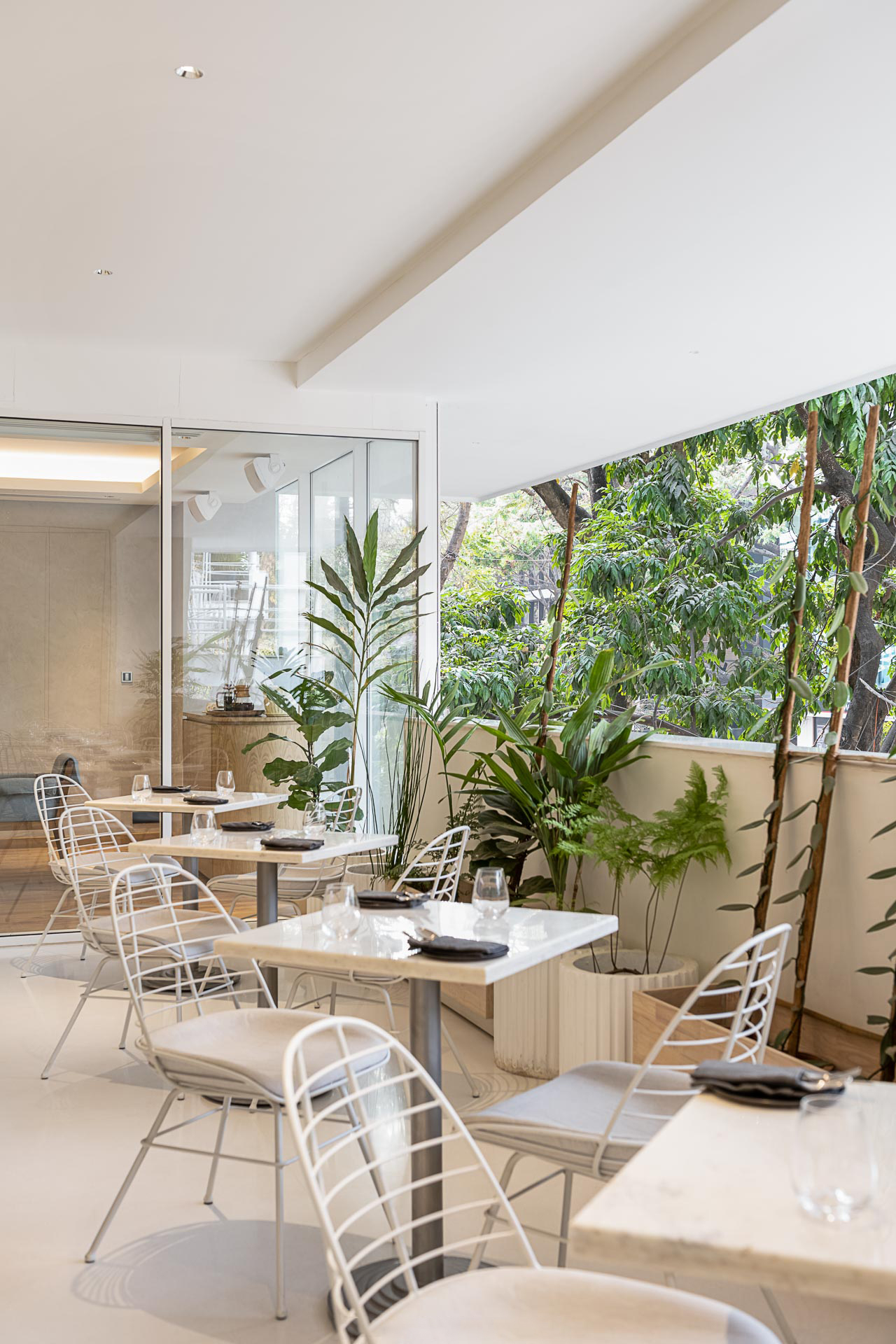
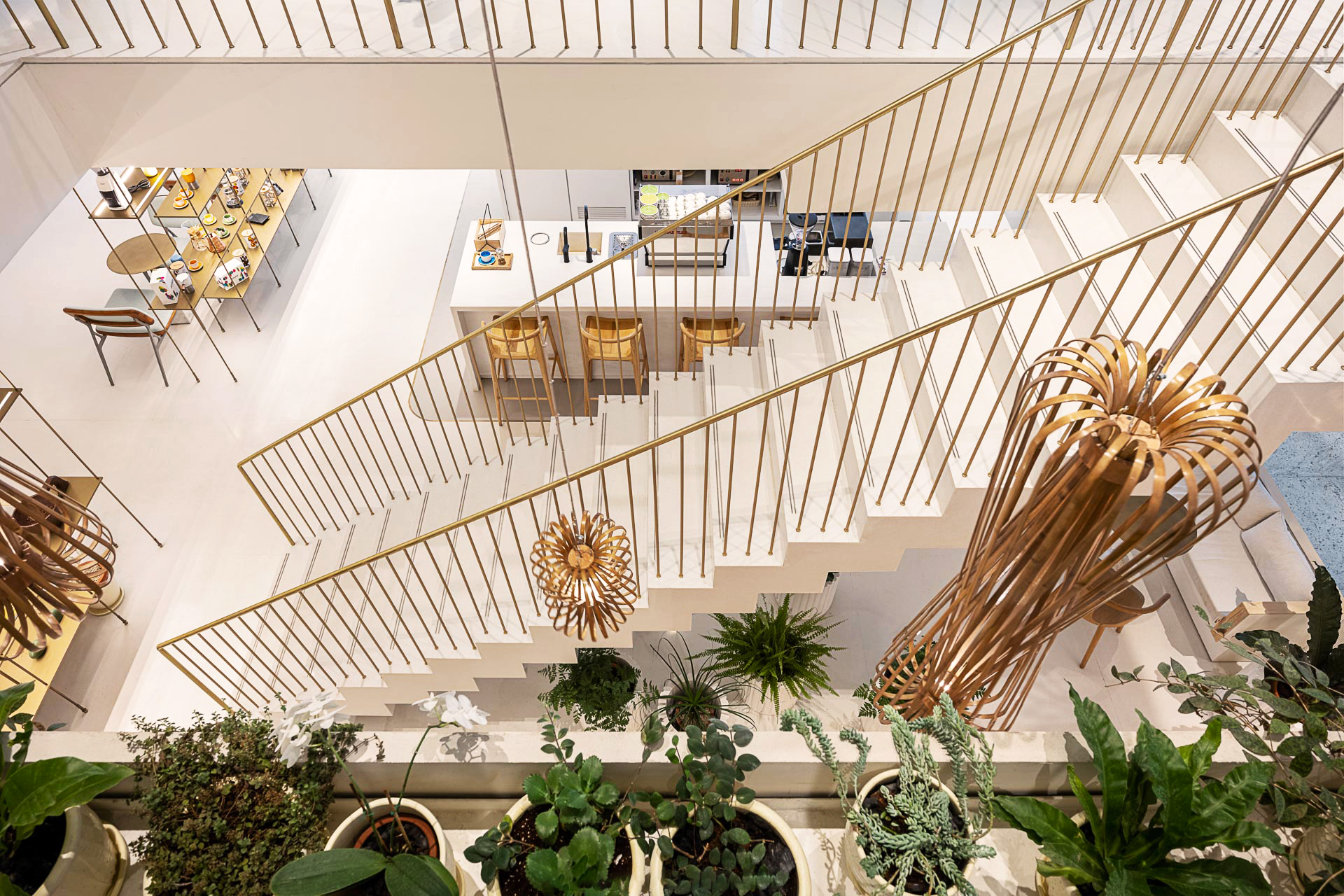
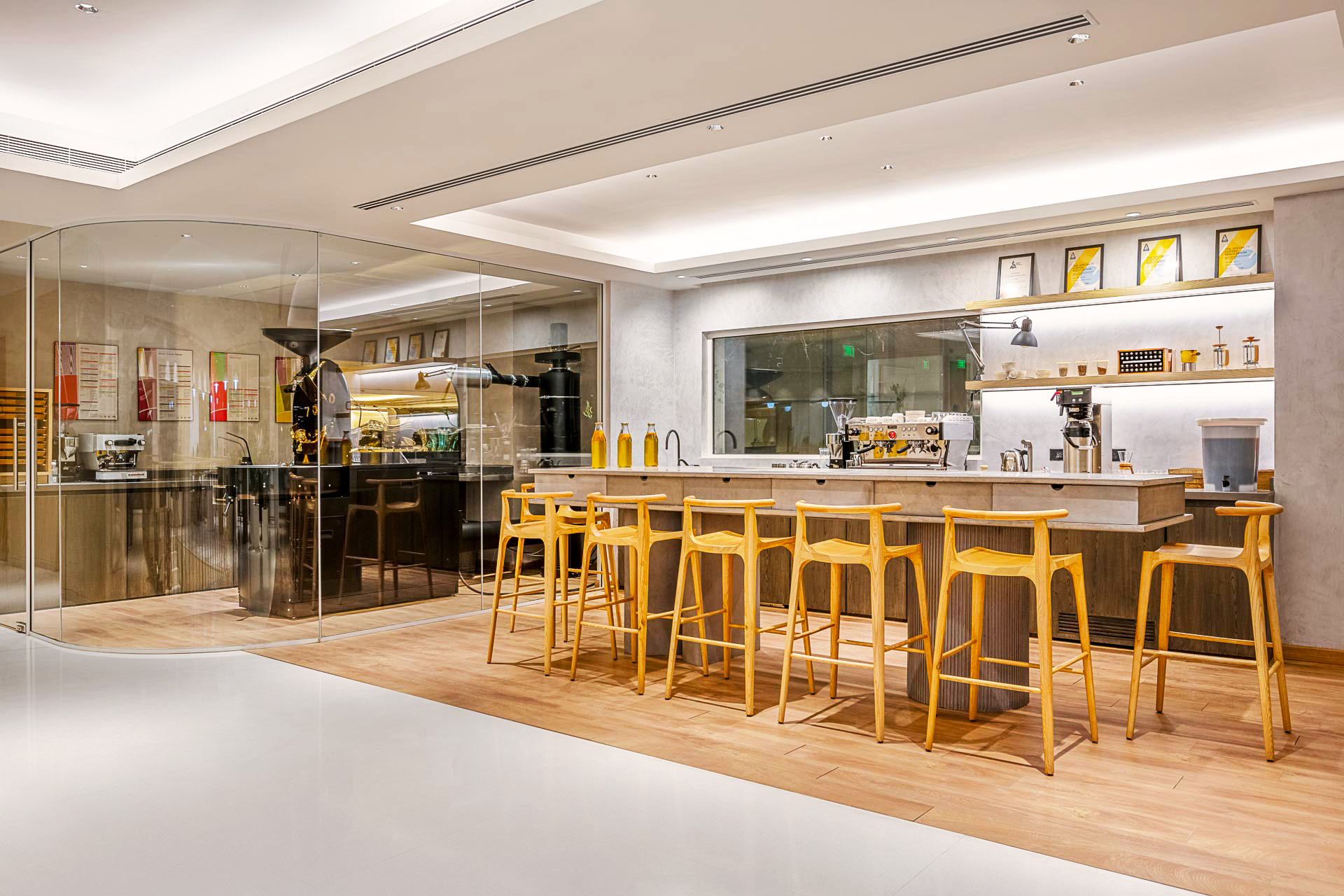
The upper level is dedicated to coffeeology—housing the roastery, training areas, and private dining spaces. This floor deepens engagement, allowing visitors to move from tasting to learning, from consumption to understanding. Together, the two levels create a continuous journey: from origin to cup, from forest to city.
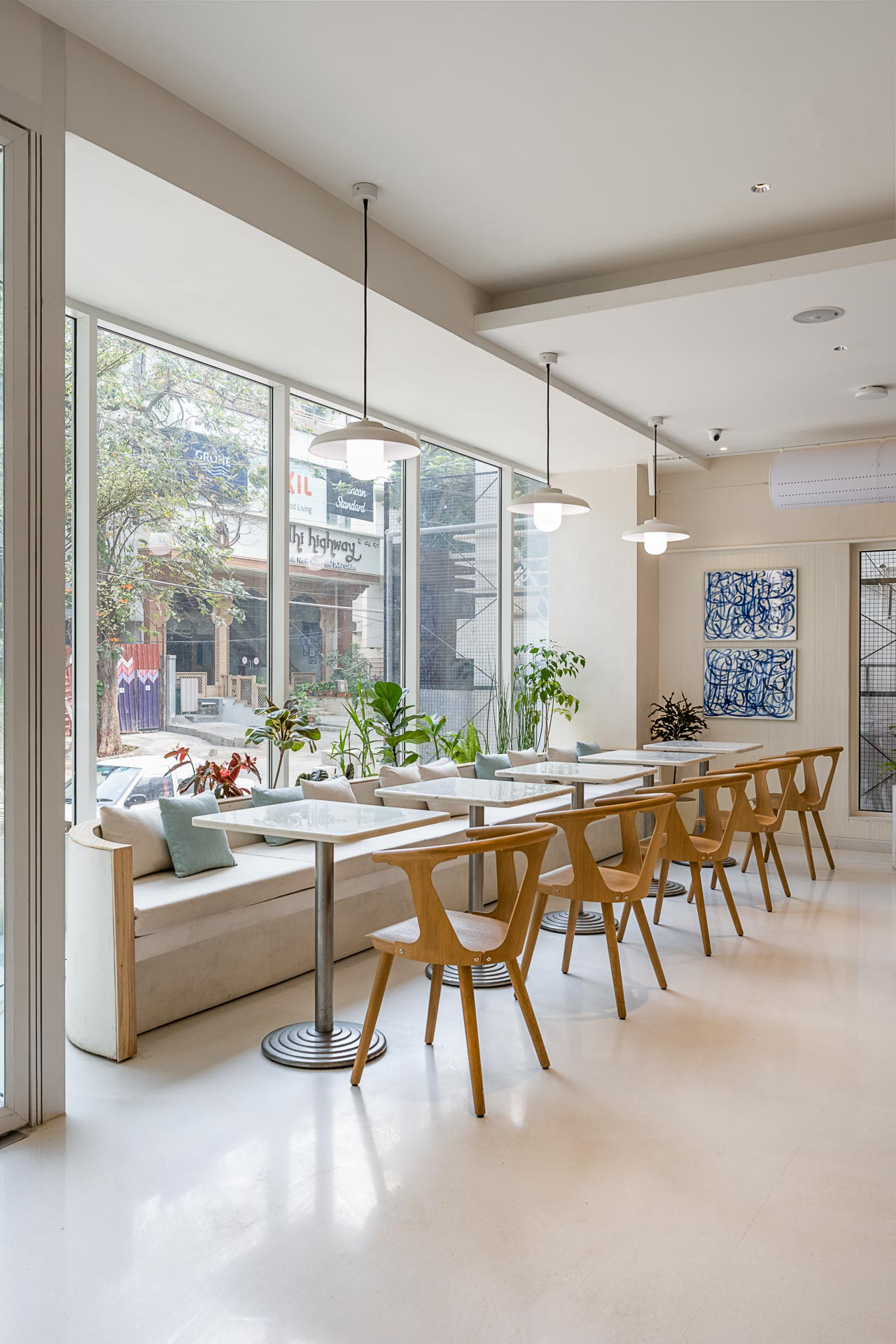
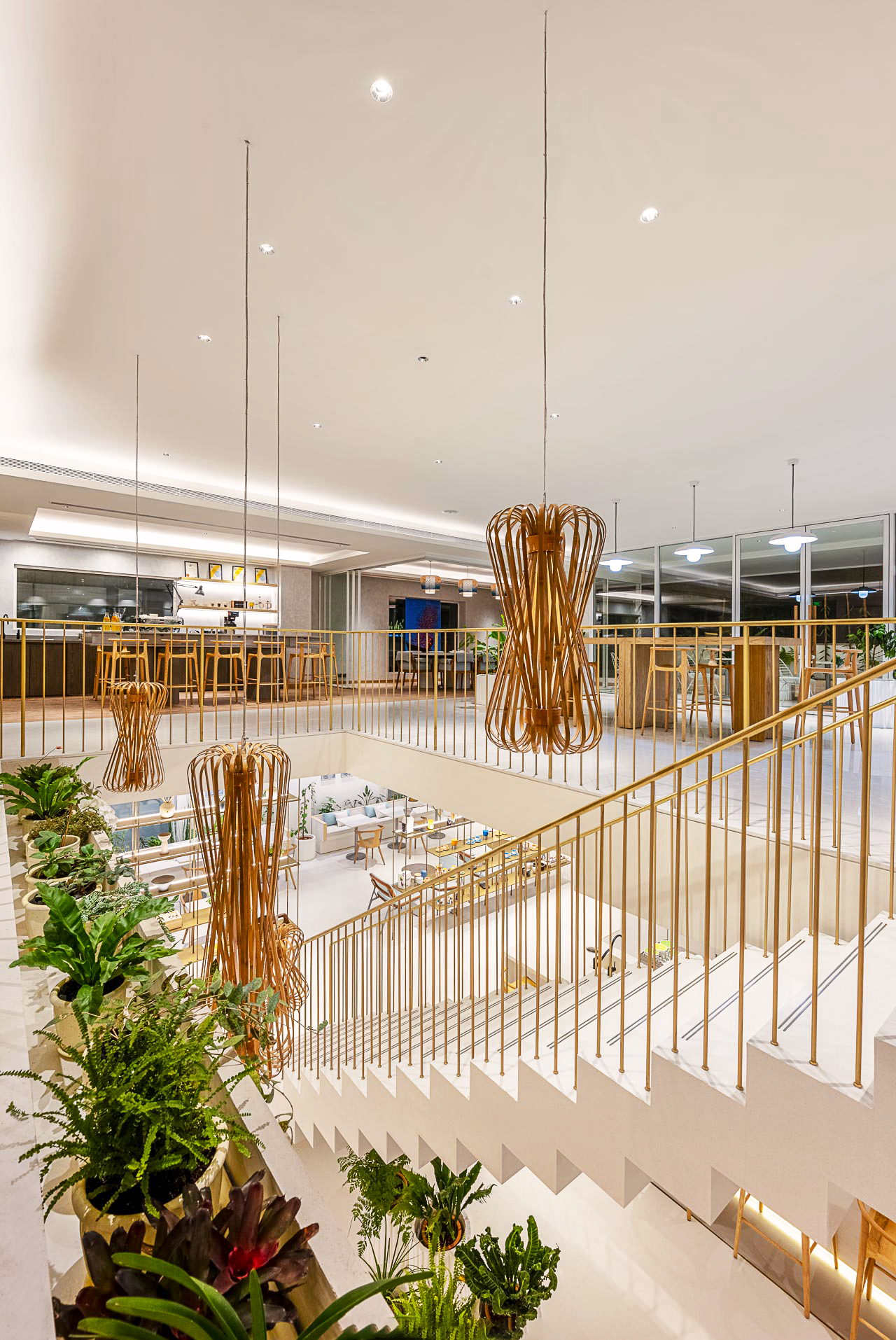
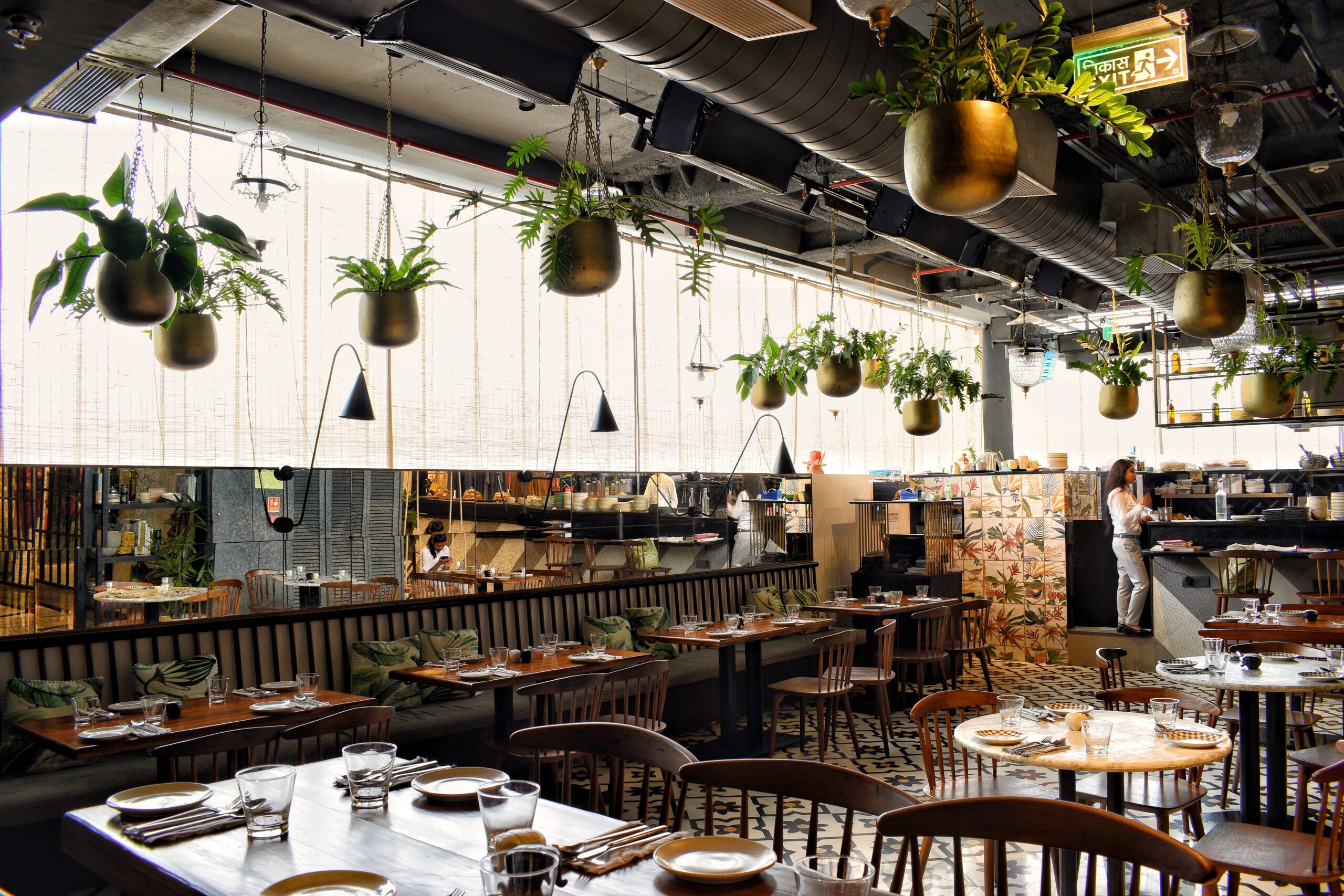
Materiality throughout the café is restrained yet expressive. Oak timber, lime plaster, white stone, brass, and abundant planting establish a calm, elemental palette. Botanical references soften the architecture, creating a serene urban oasis that feels removed from the city without disconnecting from it.
Subtle details embed deeper narratives. Custom furniture elements reference the cosmic cycles integral to biodynamic farming—including discreet markings of lunar phases integrated into table legs and joinery. These gestures are never didactic, but quietly symbolic, rewarding attention and curiosity.
LAB collaborated closely with Indian designers and craftspeople—Ayush Kasliwal, Sandeep Sangaru, Josmo, and Mianzi—to create bespoke furniture and objects that reinforce the café’s commitment to sustainability, handcraft, and thoughtful design. Each piece contributes to a cohesive language rooted in making, material honesty, and longevity.
Curated art lines the walls, while the bookshop introduces another layer of engagement—positioning Araku Café as a place to read, learn, converse, and reflect. The space resists speed. It encourages pause.
Araku Café ultimately operates as a living manifesto—for conscious agriculture, for cultural continuity, and for architecture as a medium of connection. It is a café, a classroom, a gallery, and a gathering space—where coffee becomes a lens through which ecology, craft, and community are experienced together.