
Dhun is a 500-acre ecological development located near Jaipur, Rajasthan, envisioned as a living landscape where settlement, ecology, and community evolve together. What was once barren land has been progressively transformed into a thriving forest through permaculture-driven strategies, restoring soil health, biodiversity, and water systems as the foundation for inhabitation.
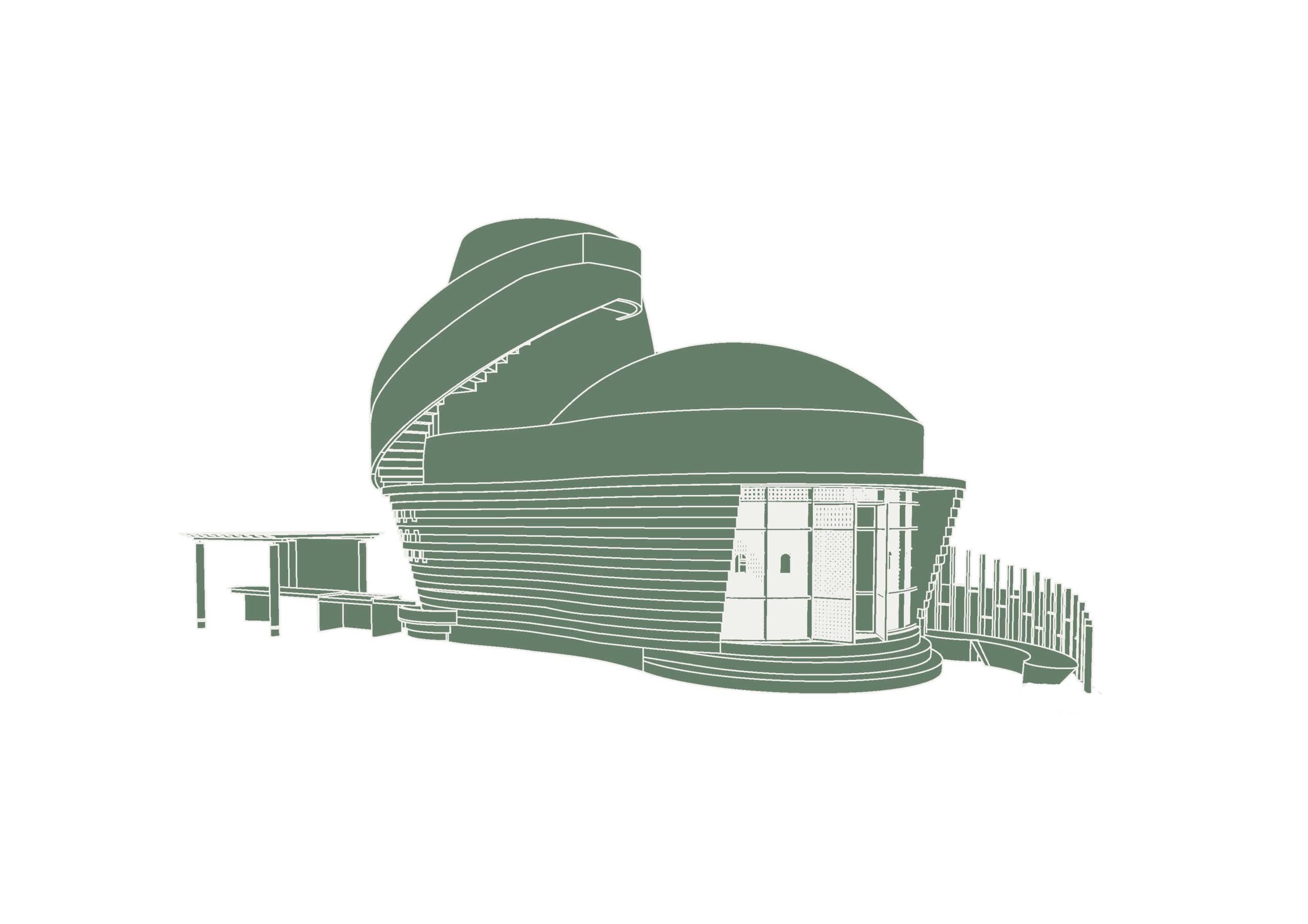
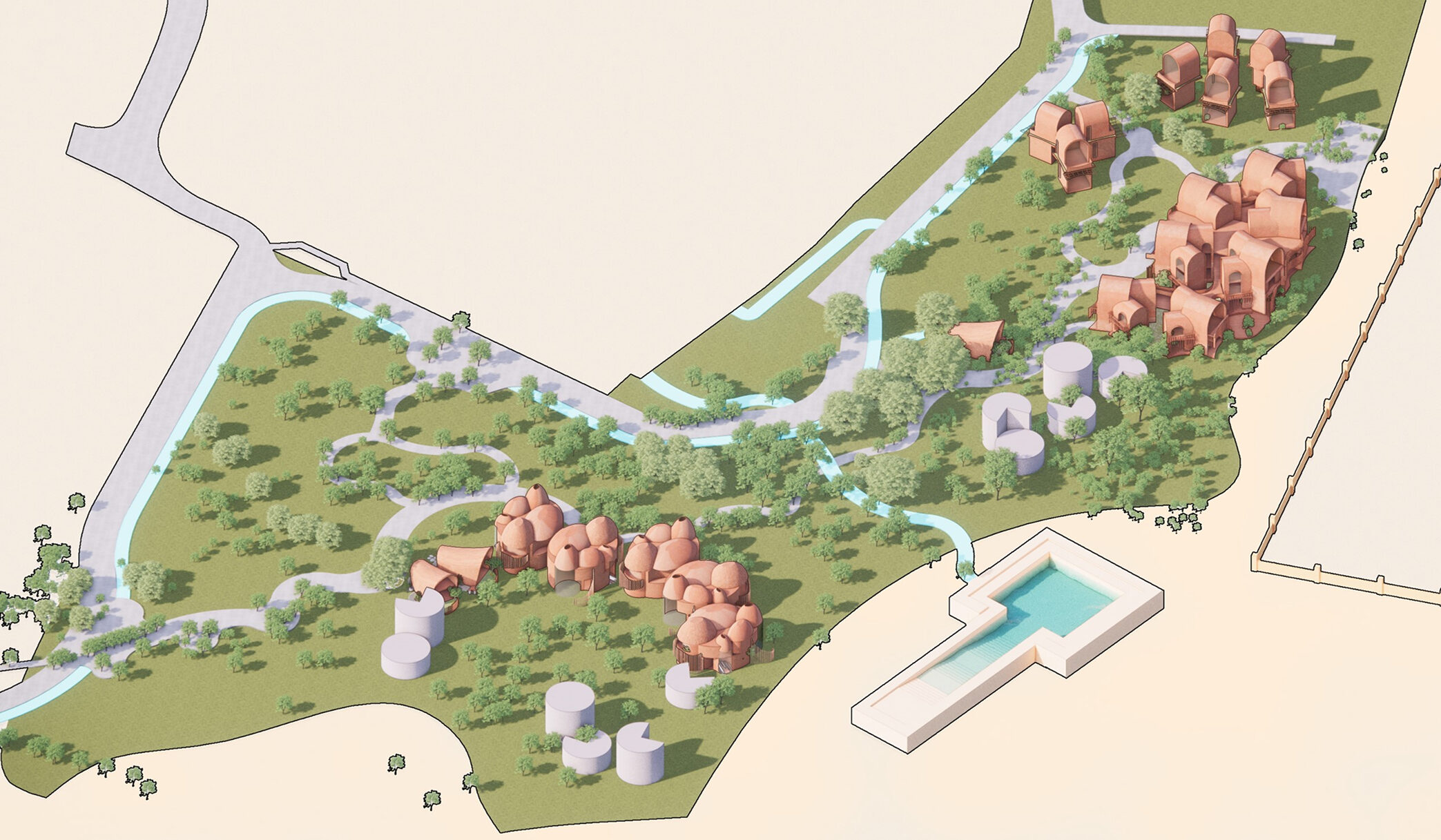
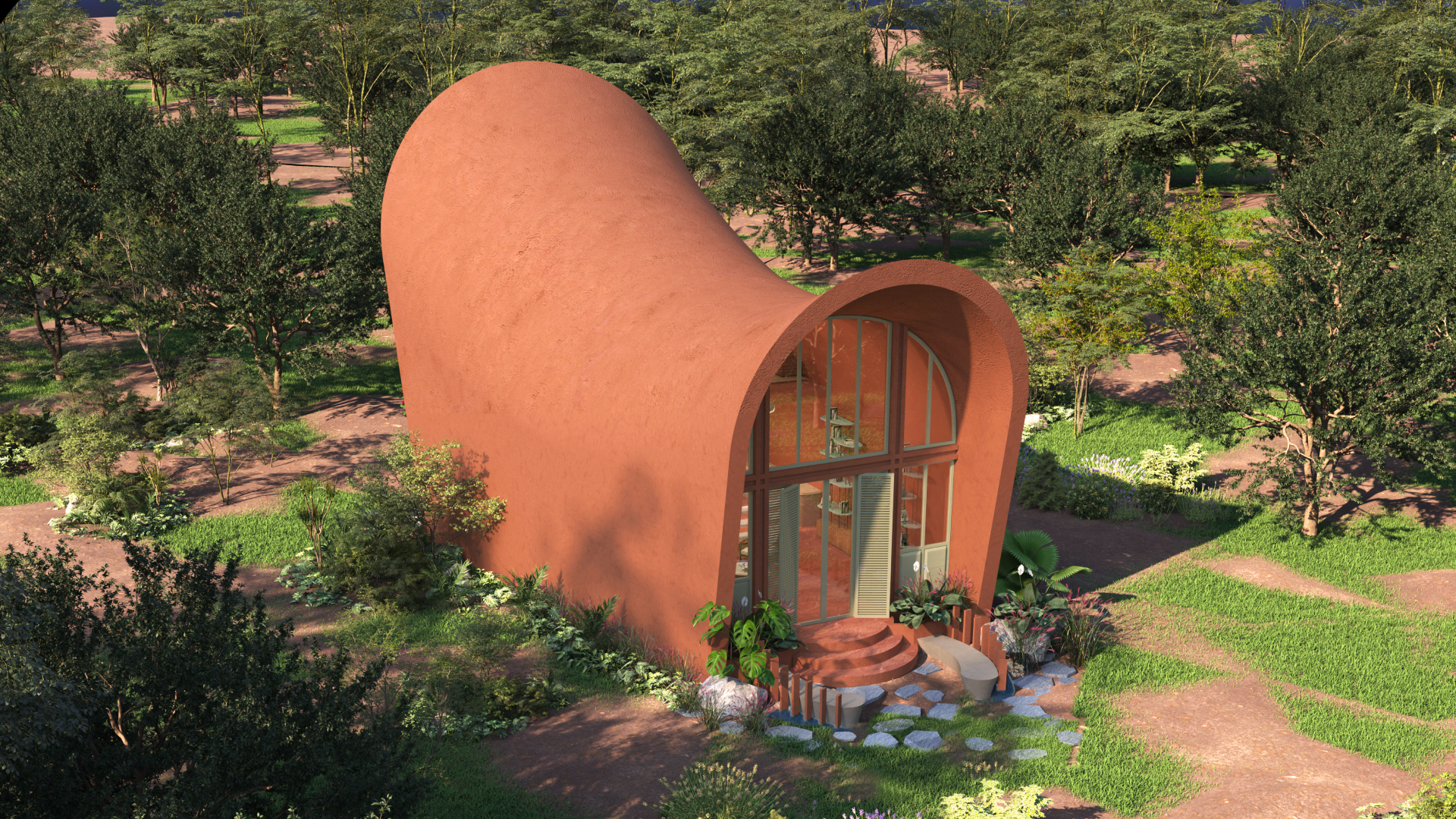
LAB has been commissioned to design the housing prototypes for Dhun—accommodating a future community of approximately 10,000 residents. The project includes seven distinct housing typologies, each responding to variations in density, use, and patterns of living, while remaining unified by shared environmental and spatial principles.
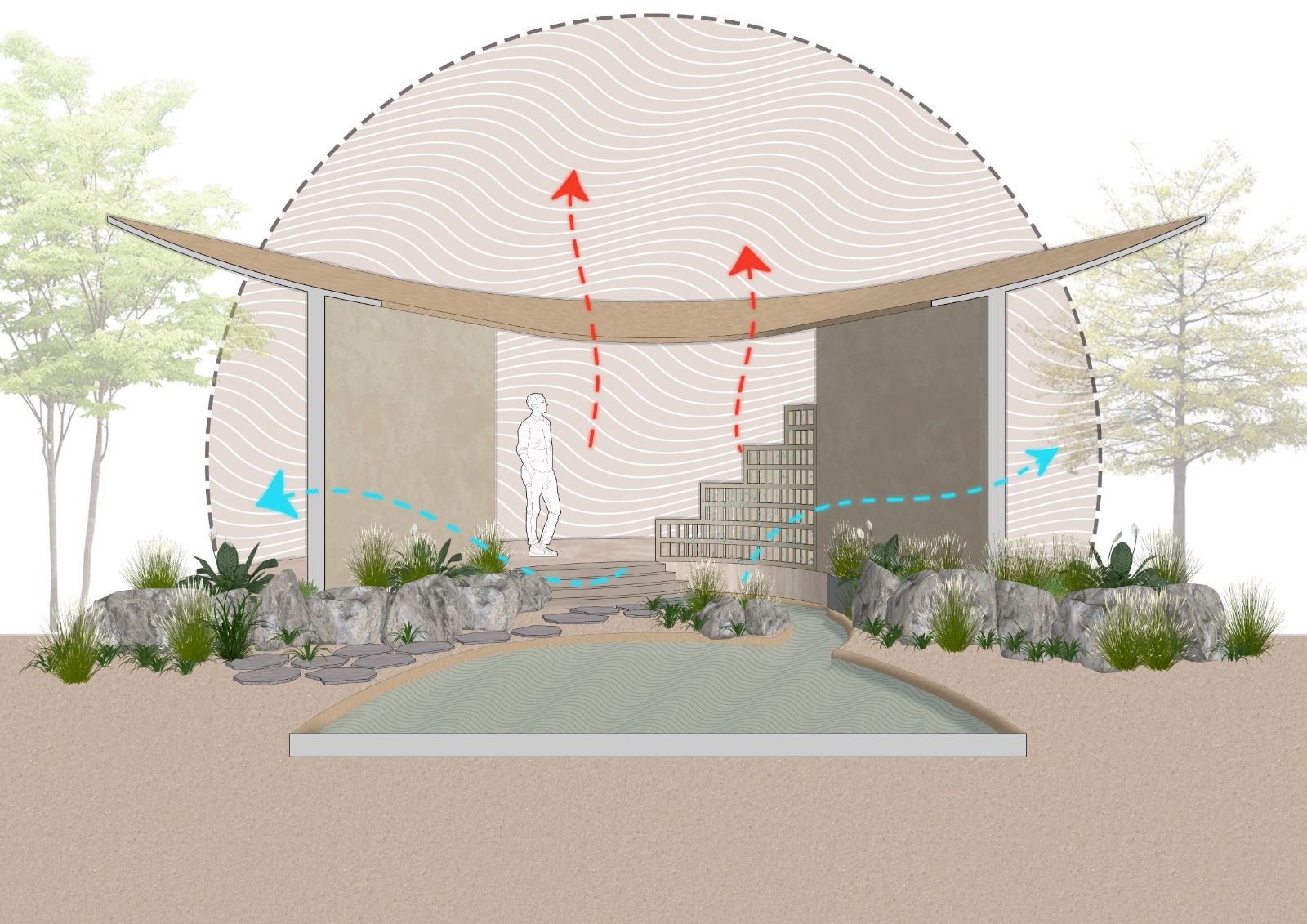
The housing is conceived to foster a deep connection between people, land, and climate, prioritising walkability, shaded outdoor spaces, and seamless transitions between indoor and outdoor life. Architecture is embedded within the regenerated landscape, allowing homes to engage directly with terrain, vegetation, and seasonal cycles, rather than sit apart from them.
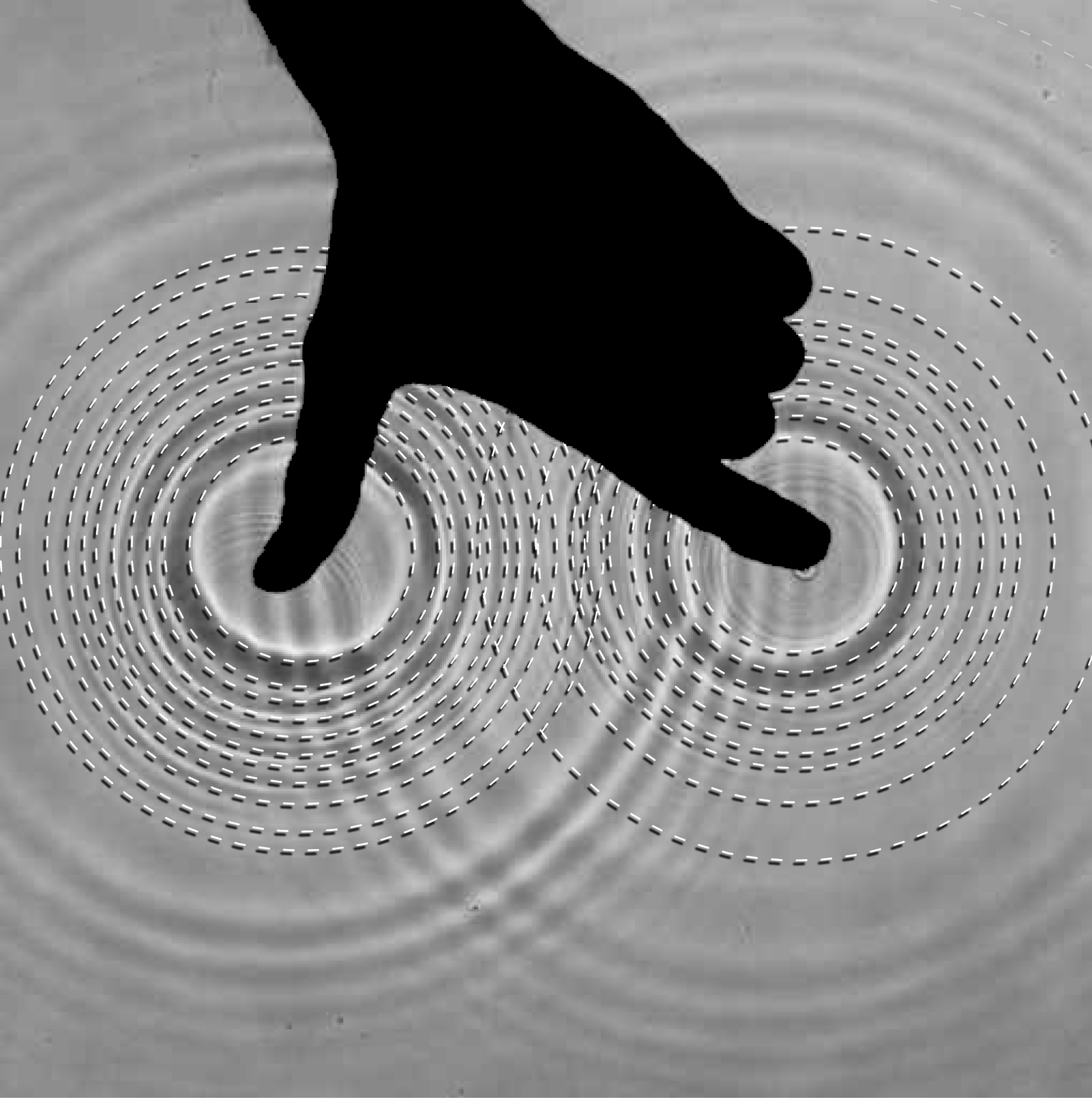
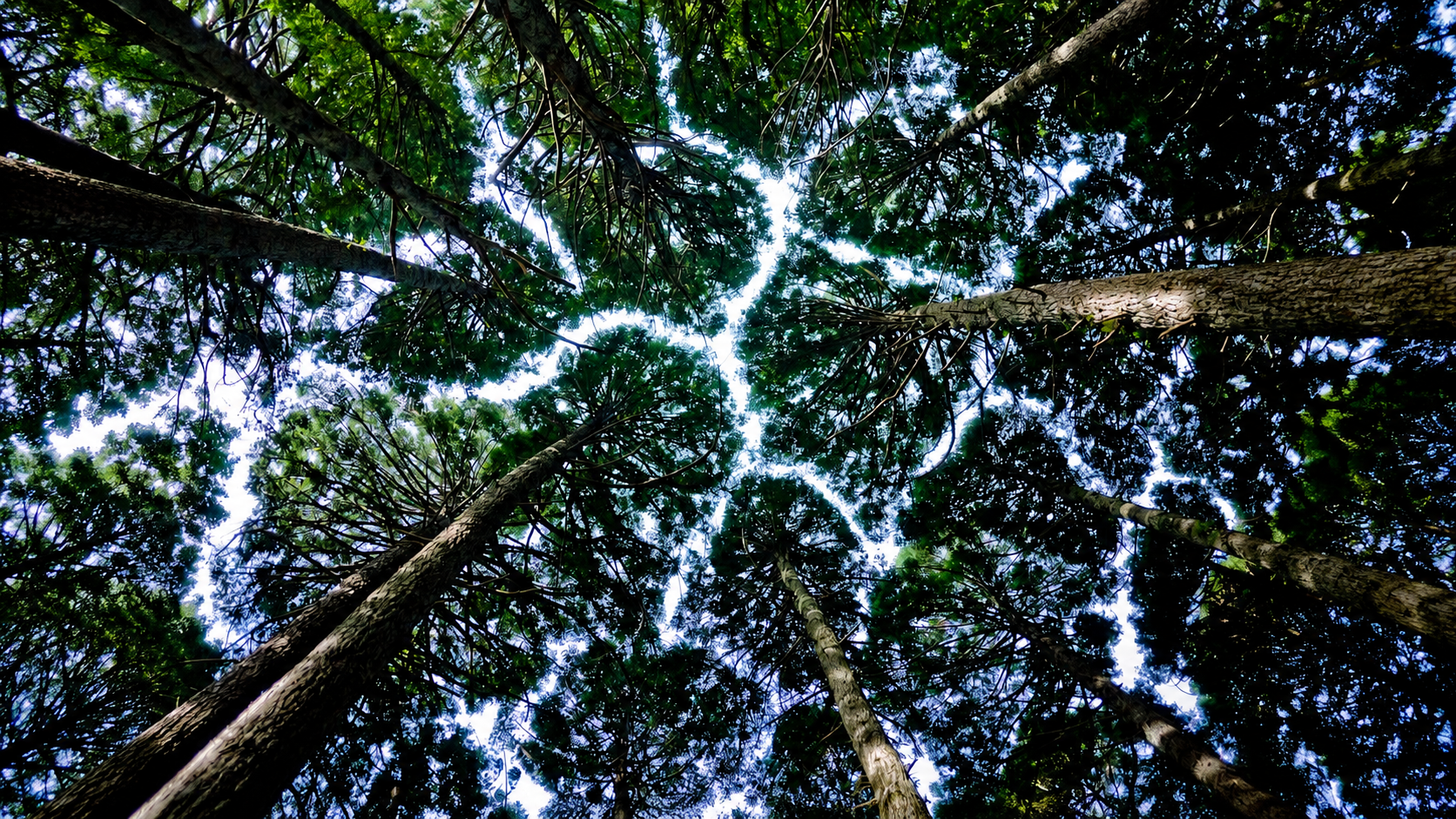
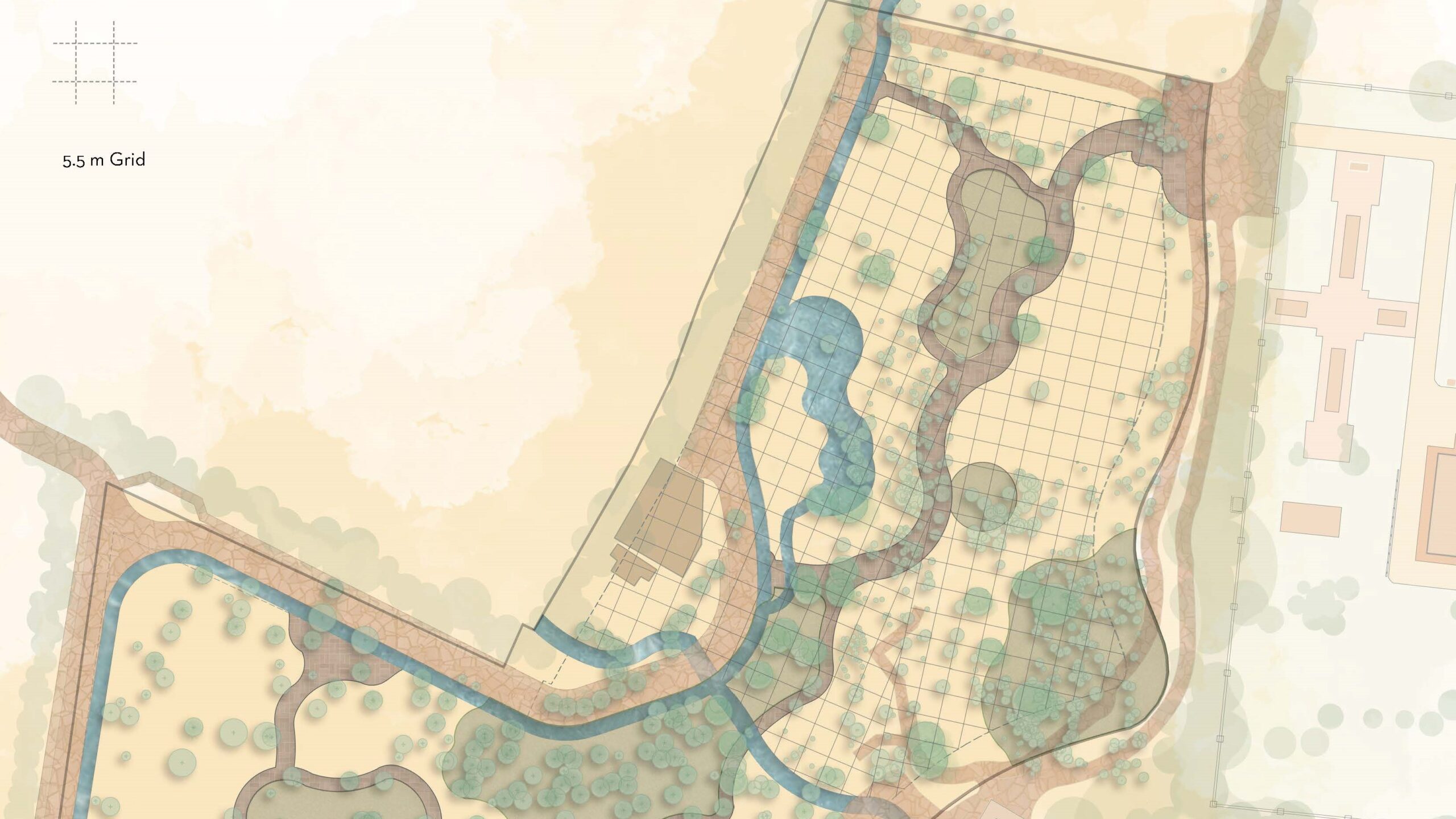
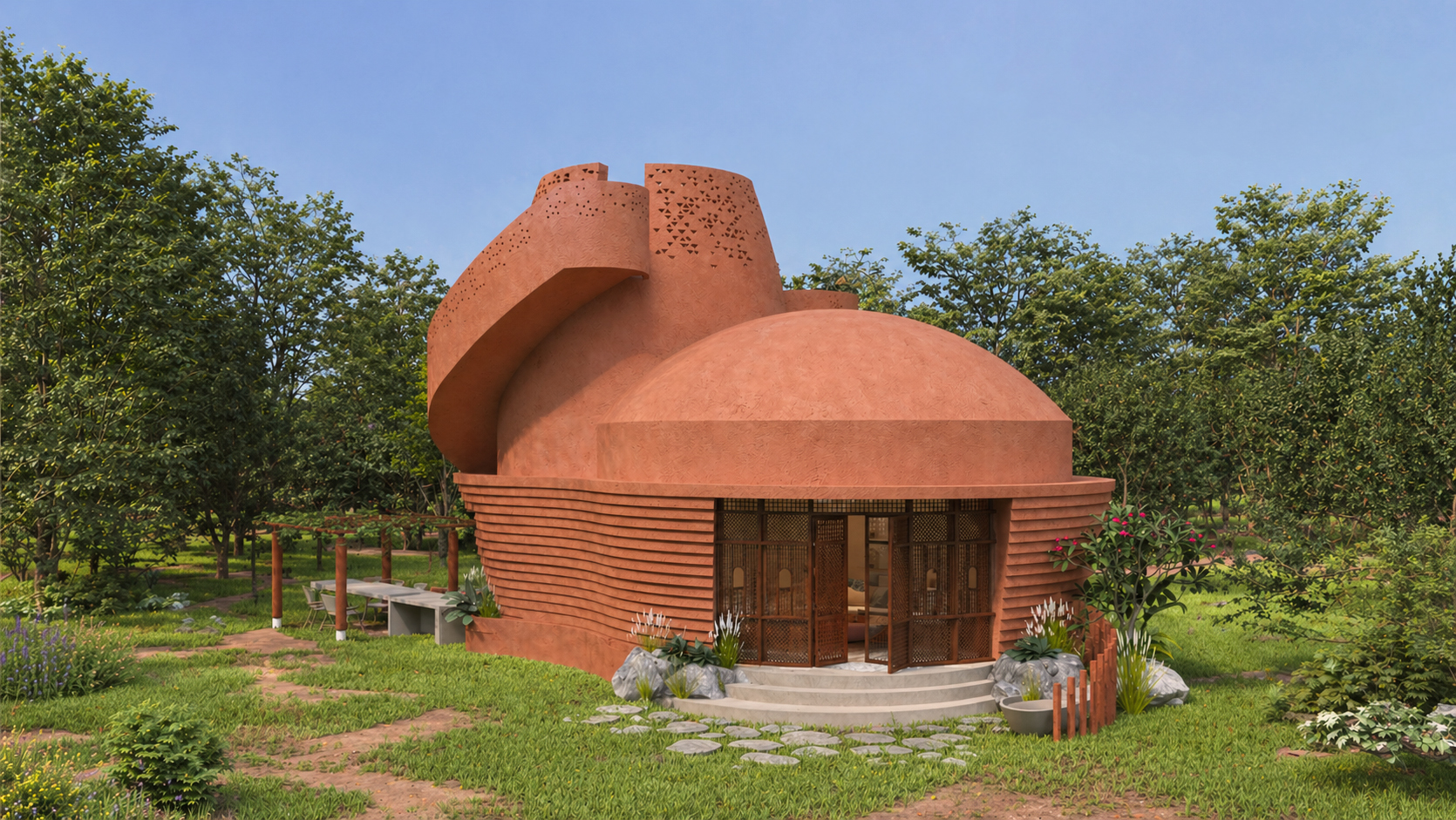
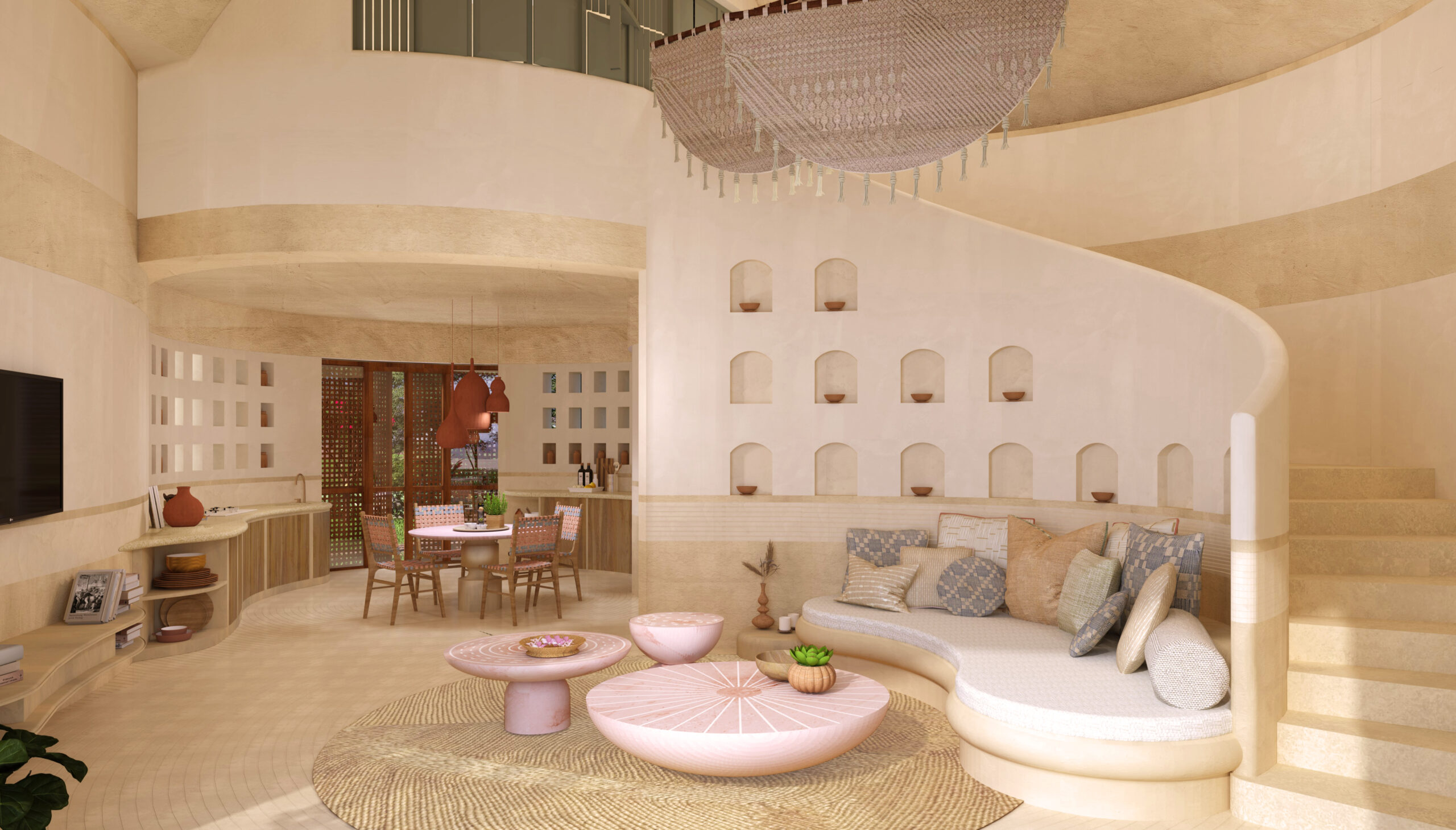
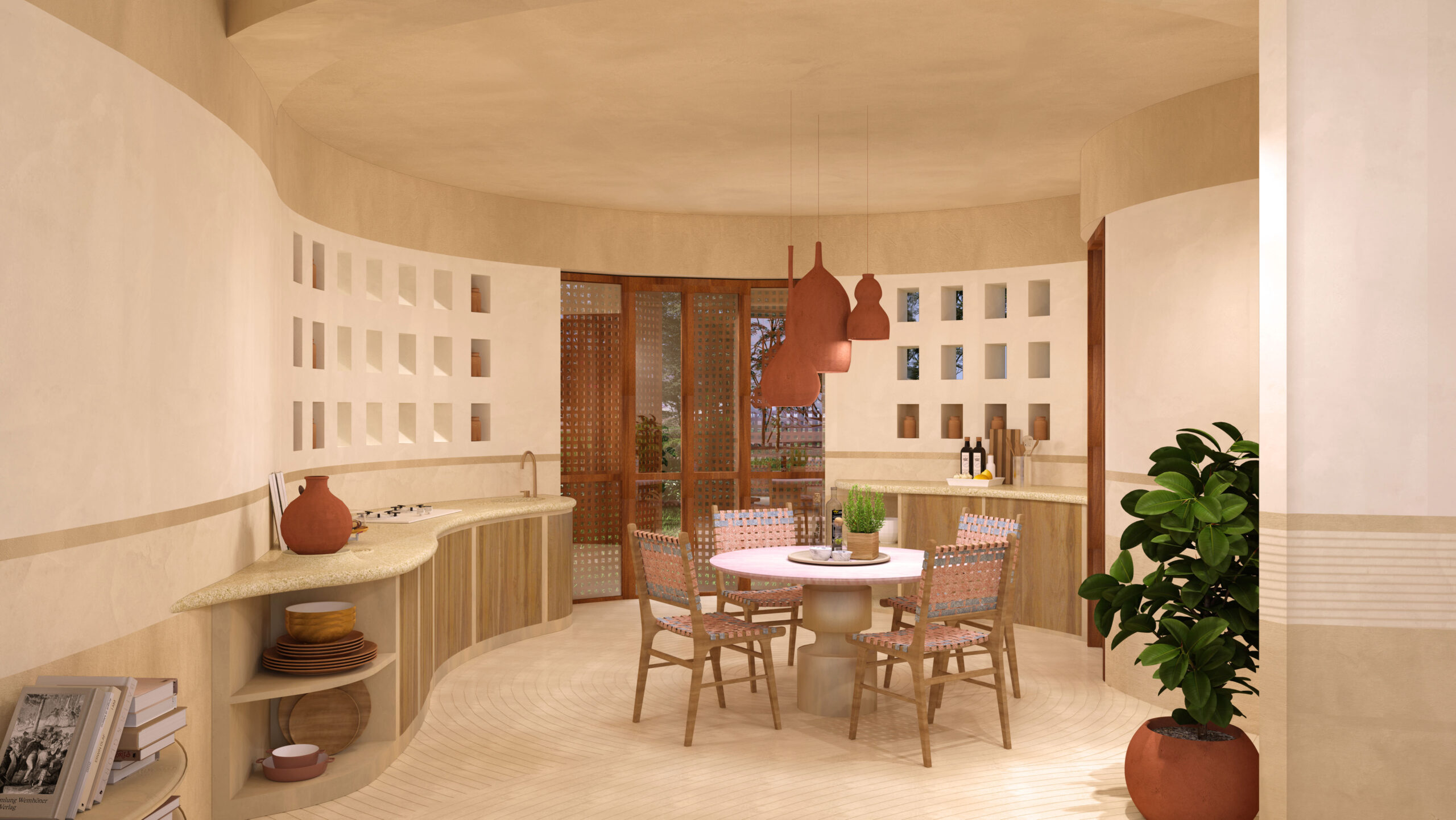
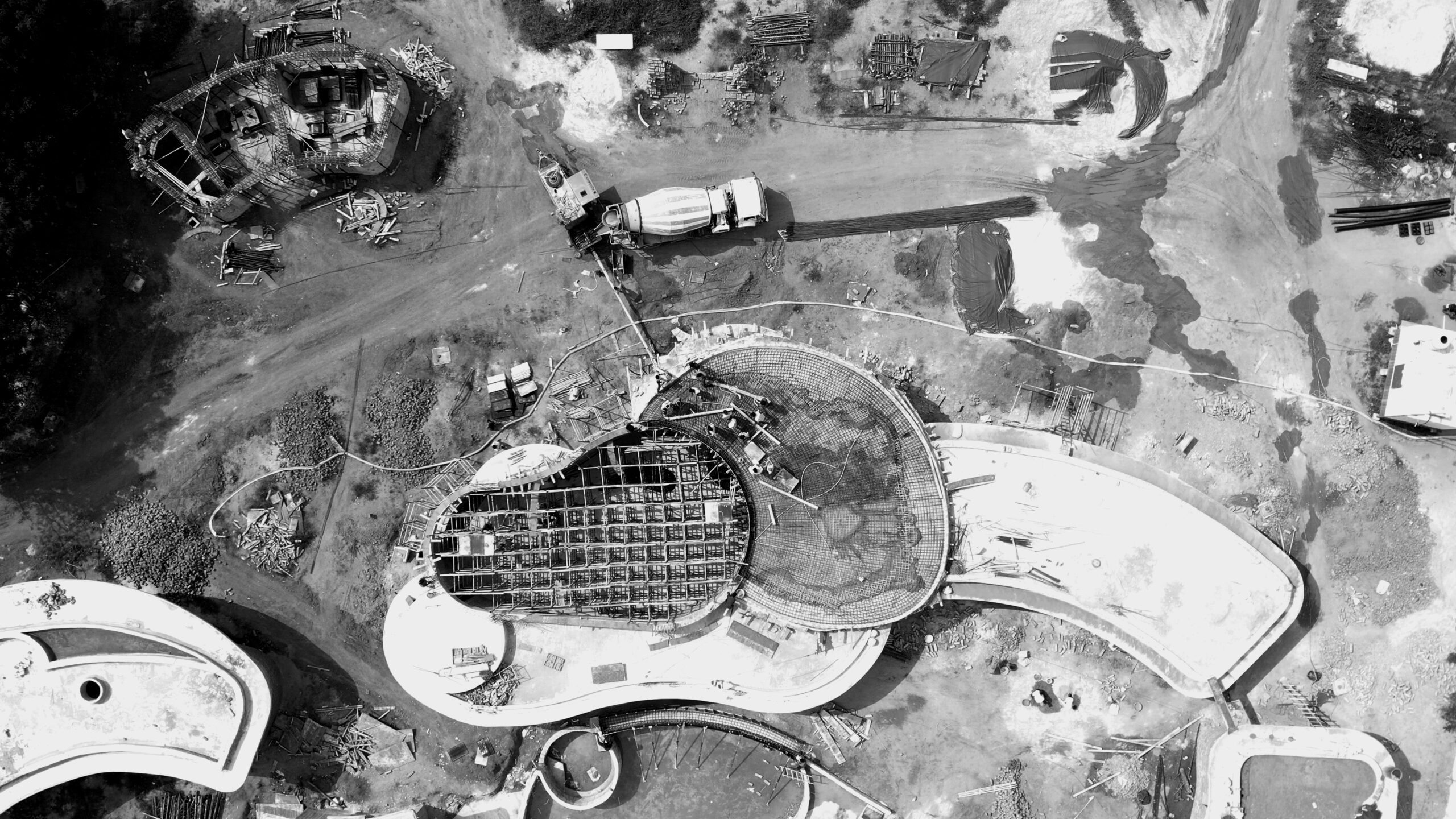
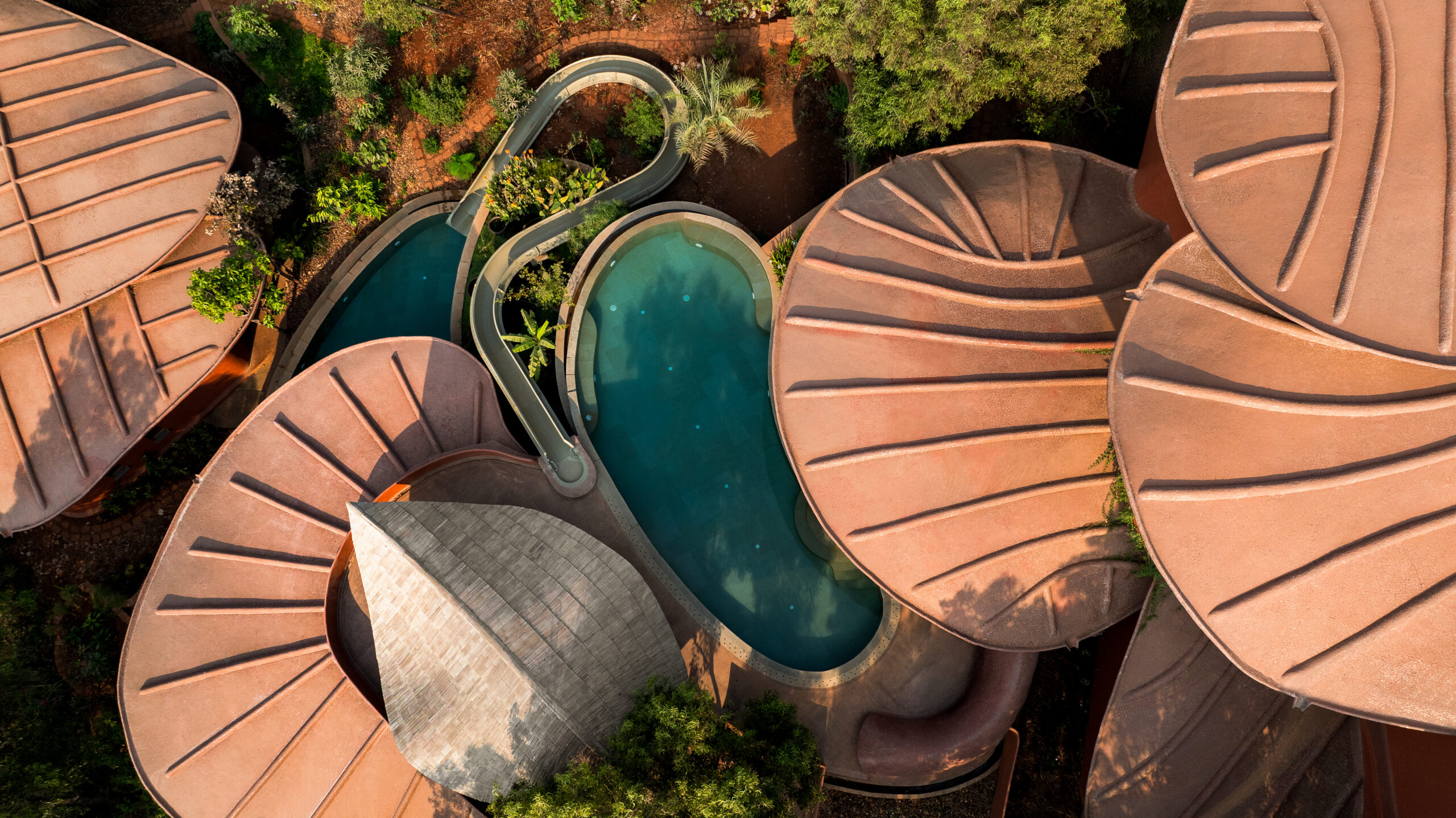
At Dhun Living, the design approach reconsiders the relevance of Cartesian boundaries. The POD housing system takes reference from trees, water, and terrain, deriving an organic grid informed by natural formations rather than imposed orthogonality. Circles, curves, and arcs form the underlying geometry, inspired by the intersections of water ripples, the clustering of tree canopies, and patterns of human gathering.
Taking cues from biological forms, the approach challenges conventional orthogonal planning systems. The organic grid becomes a geometry of community—shaped by human scale, proximity, and chains of interaction—and establishes the spatial logic for individual units and their collective grouping.
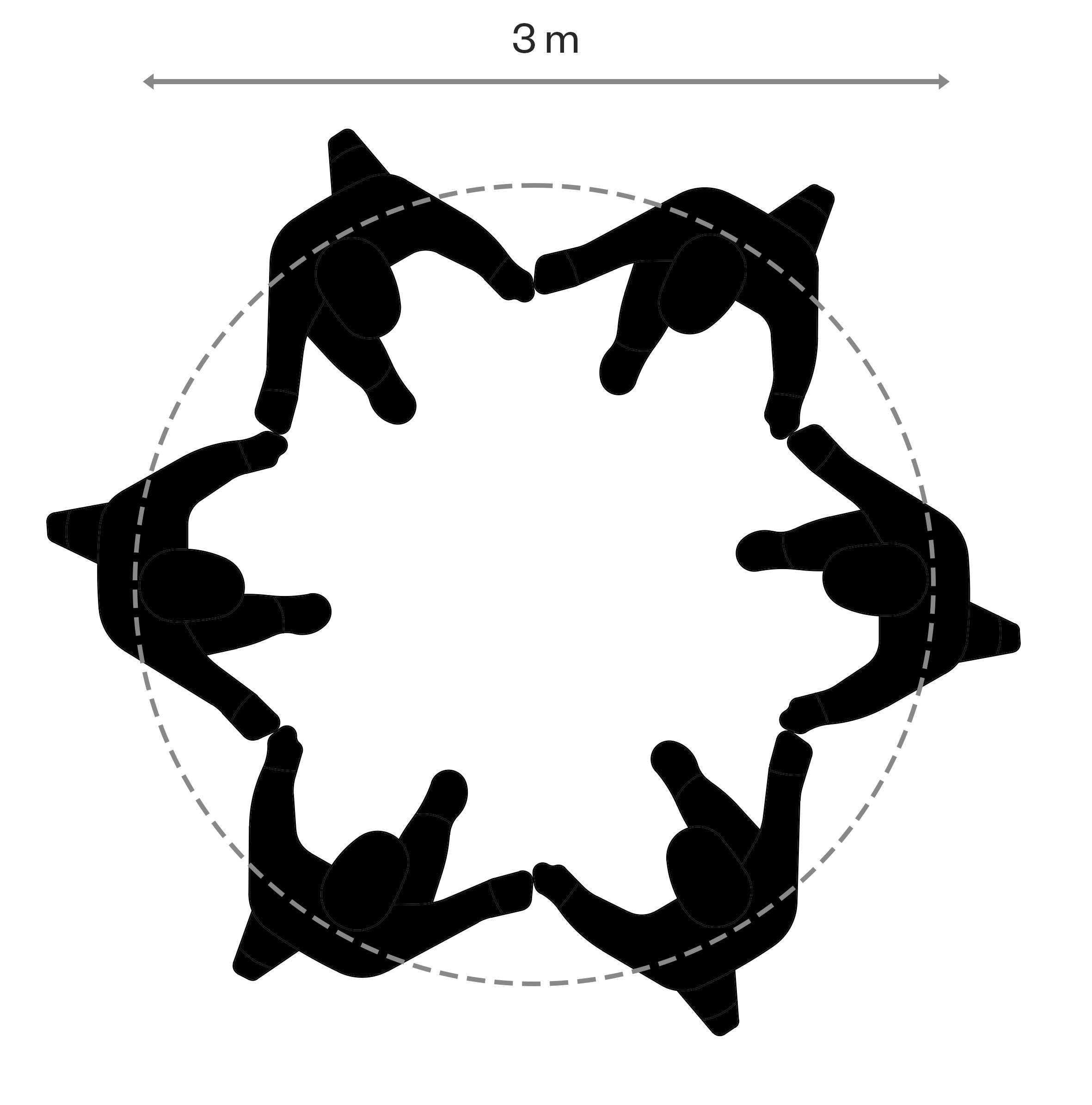
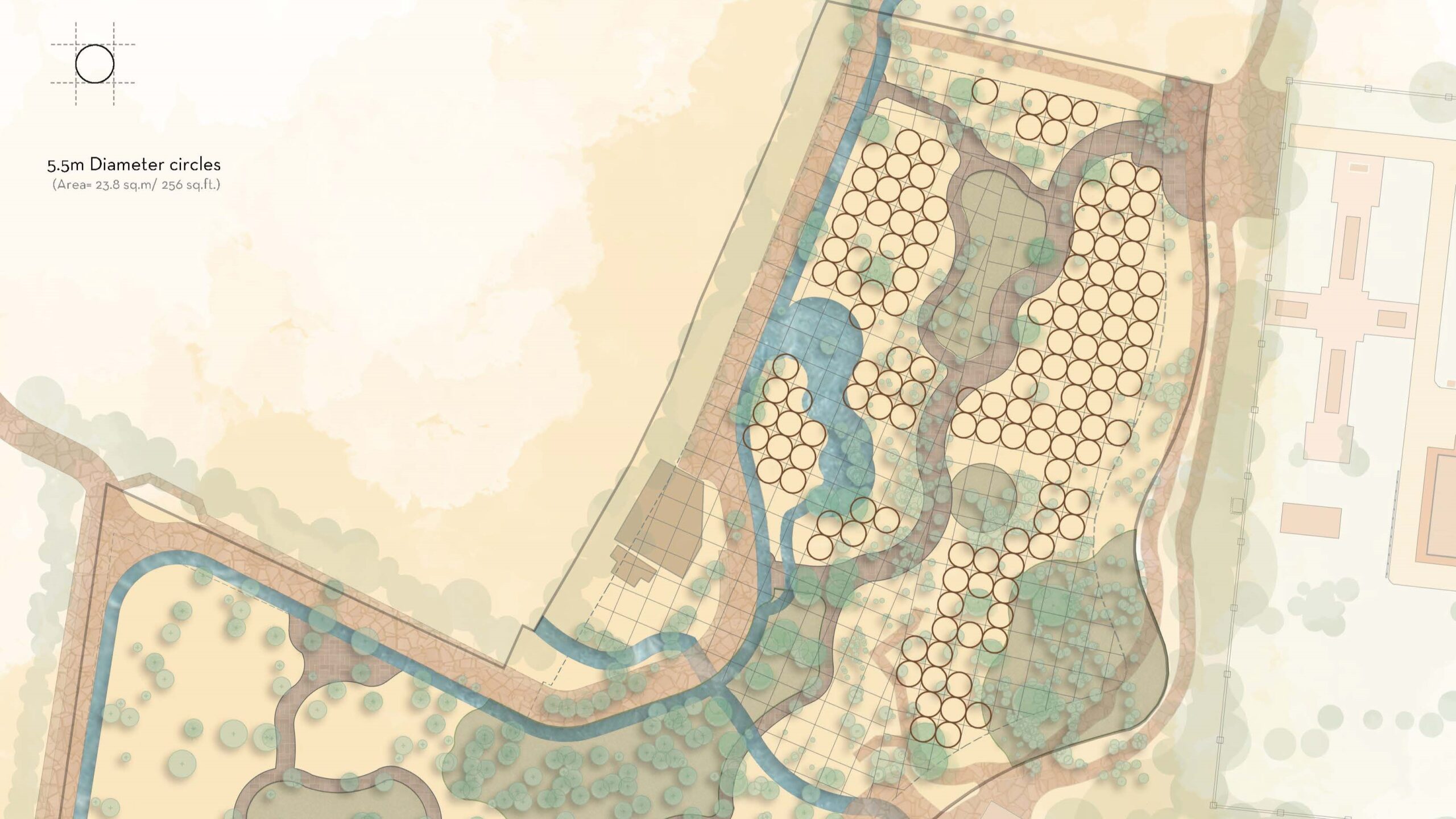
Housing units are generated through 3-metre and 5-metre diameter circular modules, grouped and adapted to create living spaces that are nested within the forested landscape. These configurations respond to anthropological needs for enclosure, connection, and adaptability, while allowing homes to grow, combine, or transform over time. The pod system operates as a flexible prototype, supporting multiple arrangements that encourage community-driven living within an ecologically sensitive framework.
Dhun is envisioned as a creative and ecologically conscious community, where architecture participates actively in land regeneration, social interaction, and alternative models of habitation. Rather than a conventional housing development, the project proposes a settlement logic rooted in nature-derived geometry, collective life, and meaningful ways of living on the land.